British Casinos Not on GamStop 2026: The Honest UK Guide to Offshore Sites
 Available in GB
Roughly one in a hundred adults in Great Britain now sits on the GamStop register. By June 2026, according to the scheme’s own numbers, 614,738 people had signed up. That’s a small country by any measure. And every one of them is, at least in theory, locked out of every UKGC-licensed site until their exclusion runs out.
Which is where the phrase British casinos not on GamStop starts to matter. Not because the offshore market is glamorous. It isn’t. It’s because Whitehall spent 2025 and 2026 rewriting the UK gambling rulebook, and a growing slice of British players decided the new rules weren’t for them.
Below is our 2026 ranking of the best British casinos not on GamStop, the licences behind them, the payment reality, the bonus maths, and a straight look at what you actually give up when you play outside the UK framework. No lyrical brochure copy. No fake generosity. Just what works, what doesn’t, and what the paperwork says.
Skip straight to the top British non-GamStop casinos of 2026 or read on for context.
Table of Contents
- What “British casinos not on GamStop” actually means in 2026
- The 2026 UK regulatory context: why more players started looking offshore
- Top British casinos not on GamStop 2026
- Comparison table: British casinos not on GamStop 2026
- How we tested British non-GamStop casinos in 2026
- Licensing landscape: which offshore regulators actually matter in 2026
- Bonuses, free spins and “no deposit” offers at British non-GamStop casinos
- Games and providers: slots, live casino, jackpots not on GamStop
- Payments: cards, e-wallets, crypto — and why GBP still matters
- Mobile and app experience at British non-GamStop casinos
- New British casinos not on GamStop launched in 2026
- Fast payout British casinos not on GamStop
- British casino reviews: what to check before you sign up
- Responsible gambling without the UKGC safety net
- Closing thoughts on British casinos not on GamStop in 2026
What “British casinos not on GamStop” actually means in 2026
The label is a workaround, not a legal category. A “British casino not on GamStop” is any online casino that markets to UK players, accepts pounds sterling or provides GBP conversion, and holds a gambling licence from somewhere other than the UK Gambling Commission. Because it doesn’t hold a UKGC licence, it isn’t required to query the GamStop database when you register. So an active exclusion won’t block your sign-up.
CuraГ§ao. Anjouan. Malta. Gibraltar. Kahnawake. Costa Rica. These are the regulators you’ll see stamped in the footer instead of the UKGC’s crown-and-sceptre mark. Each has its own quirks, and we’ll get to those. What they share is one thing: no obligation to plug into GamStop and no obligation to enforce UK-only stake caps.
A “British” non-GamStop casino, then, is offshore in law and British in commercial focus. Interface in English. Support in UK hours. Deposits in pounds. Slot titles familiar to anyone who has spent an evening on a UKGC platform, because the studios themselves — Pragmatic, NetEnt, Play’n GO, Evolution — operate globally and their games appear on both sides of the fence.
Who these sites are actually built for
Not for self-excluded players. That’s the honest bit that most affiliate sites bury on page three. If you registered with GamStop precisely to keep yourself away from online casinos, an offshore site is not a workaround. It’s the road back to the problem you took steps to avoid. We say it plainly because pretending otherwise is worse than useless.
Non-GamStop casinos exist for a different customer. Someone who never joined GamStop but ran into the ВЈ150 affordability check threshold and lost patience. Someone put off by the ВЈ5 slot cap. A high roller who wants live tables at ВЈ5,000 a hand. A crypto user who resents having to pipe everything through open banking. That is the actual audience these platforms serve.
The 2026 UK regulatory context: why more players started looking offshore
Something has to explain the rise. GamStop registrations jumped 16% year on year in H1 2026, with under-25s up 26%, and May 2026 alone brought 12,236 new sign-ups — the busiest month the scheme has ever recorded. Awareness is genuinely growing. But so is offshore traffic, and that isn’t a coincidence. Both trends have the same root cause: the UKGC rewrote its licence conditions faster than the market could absorb them.
Here is what actually changed, in order of when it landed:
April 2025 — statutory levy commences. Every UKGC licensee now pays between 0.1% and 1.1% of gross gambling yield to a mandatory fund, replacing the old voluntary contribution that some operators had trimmed to £1 a year. The government projected around £100 million for research, prevention and treatment. Half of it flows into the NHS-led treatment system.
April and May 2025 — statutory slot stake caps. £5 maximum per spin for anyone aged 25 or over. £2 for 18-24s. First time the UK has treated online slots like the FOBTs of a decade ago.
January 2026 — bonus and promotional reforms. Wagering requirements at UKGC sites capped at 10x the bonus amount. Mixed-product bonuses banned outright, so an operator can no longer bundle a casino welcome offer with a free bet on football.
April 2026 — Remote Gaming Duty rises to 40%. Announced in the 2025 Autumn Budget, applied through the Finance Bill 2025-26. The consequence is straightforward: UK operators have less margin to spend on bonuses, VIP schemes and marketing, and it shows up in the offers you see.
Affordability checks. Light-touch financial risk assessments now trigger at ВЈ150 net loss in a rolling 30-day window. That’s not a lot of money in a slot session. Enhanced checks kick in at higher thresholds and can involve manual review of bank statements or payslips.
Add it up and a UK-licensed casino in 2026 looks very different to one from 2022. Bigger deposits mean paperwork. Slots feel slower to anyone used to ВЈ20 spins. Bonuses are simpler but smaller. Live-table stakes have hard ceilings.
For players who registered with GamStop because they had a real problem, none of this should sound anything but sensible. For everyone else — including plenty of casual players who never had an issue — the friction has become the entire game. That’s the pressure that funnels people towards the search term “british casinos not on gamstop” in the first place.

Top British casinos not on GamStop 2026
The list below is an editorial ranking based on the tests described in the methodology section. Every operator here holds an active offshore licence, accepts UK players, and — at the time of writing — processes withdrawals within the timeframes we tested. None of them holds a UKGC licence. That is the entire point.
1. MyStake — best all-round British casino not on GamStop
MyStake is the operator that consistently comes out on top in mainstream 2026 reviews of the non-GamStop segment, and it’s easy enough to see why on the numbers. A library of around 4,000 titles, a fully integrated sportsbook, and a welcome offer that bundles a triple-deposit match with a generous run of free spins. It also runs on multiple currencies with GBP support in the cashier.
What actually makes it work isn’t the volume. It’s the fact that MyStake plays like a mature site rather than a beta. Live chat responds inside a couple of minutes on weekday evenings. The KYC path is optional up to a point and then predictable when it triggers. Deposit limits are set by the player, not by an underwriter. If you want a non-GamStop casino that behaves like a real business, this is the default.
The trade-off is bonus terms with wagering in the 40x range. Not scandalous by offshore standards, but noticeably above the 10x UKGC cap. Read the fine print before you accept anything the front page advertises.
2. JackBit — best crypto-first British casino not on GamStop
JackBit built its 2026 reputation on the payments layer, not the game lobby. Deposits and withdrawals settle in Bitcoin, USDT, Solana, Litecoin and a rotating shortlist of altcoins, with FIAT still available for players who prefer cards. Withdrawal times on crypto are the quiet flex here: crypto usually clears inside the hour once processed, and the queue itself rarely lingers past twenty-four hours.
Games are the standard offshore mix — Pragmatic, Hacksaw, Nolimit City, Push Gaming, plus a “provably fair” category powered by BGaming and Spribe. Live tables come from Evolution and Ezugi. Nothing you haven’t seen at a UKGC site in 2023, before some of these providers reduced their UK footprint.
JackBit isn’t the place for a bonus hunter. Its welcome offer is deliberately modest by non-GamStop standards, and the site leans on rakeback and reload promotions instead. That will suit anyone who’s tired of chasing 45x wagering. It won’t suit anyone who joined for a headline number.
3. SpinDog — best British non-GamStop casino for fast withdrawals
SpinDog leans hard on payout speed as its main promise, and in our sampling it delivered. Crypto cashouts landed inside two hours on business days. E-wallet withdrawals hit accounts the same afternoon in the tests that closed before 4pm UK time. Card withdrawals still take one to three working days, which is standard across the segment.
The site itself is clean and mercifully light on the “epic wins” theatre that clutters half the non-GamStop market. It runs CuraГ§ao’s new-style CGA licence rather than a legacy master-licence stub, which puts it on the newer side of the regulatory reform (more on that in the licensing section).
Downsides: the game catalogue is narrower than MyStake’s and the live-casino floor is Evolution-only, which is fine for most players but limiting if you want the tables from Pragmatic Live or Playtech.
4. Bananzia — best British non-GamStop casino for high rollers
Bananzia’s positioning is a straightforward pitch to the top end of the market: high withdrawal ceilings, no drama on large deposits, and a personal account manager once you clear a modest turnover threshold. Reviews across the sector in 2026 point to smooth handling of five-figure crypto cashouts, which is not something UK-facing sites routinely deliver quickly.
The welcome package is unremarkable and the VIP scheme is generic. “VIP” itself is a word we’d take with tongs at any casino, offshore or otherwise. It’s cheaper motel furniture with a coat of fresh paint most of the time. But at Bananzia the practical mechanics — cashback percentages, weekly reload caps, birthday bonuses — are at least documented and honoured within the terms.
5. DonBet — best British non-GamStop casino for live dealer
DonBet has spent 2026 building out its live floor, and it shows. Every Evolution studio is on the menu, the sportsbook sits alongside the tables in a single wallet, and blackjack variants include the higher-stakes rooms that UKGC platforms tend to cap. The welcome bonus is a familiar two-part deposit match with a bundle of free spins, weighted towards new players who intend to play slots as well as live games.
The live-casino angle is the real reason to add DonBet to a shortlist. If Evolution’s product is what you actually want from an online casino, DonBet delivers it without the ВЈ100 or ВЈ250 hard caps that some UK sites use to comply with responsible gambling triggers.
6. OdinFortune — most polished 2026 launch
OdinFortune is one of the newer arrivals in the segment, launched in early 2026 with a Curaçao CGA licence and a clean product from day one. Welcome offer around the 200% mark up to £1,000 with a healthy free-spin bundle. Cashier handles cards, Skrill, Neteller and the usual crypto set. Live chat during UK business hours is fast; overnight, less so.
The catch with newer sites is the same everywhere. Track record is short, dispute history is thin, and Trustpilot volume can be manipulated in the early months. OdinFortune has a small handful of complaints about slow first-withdrawal KYC, which is not unusual on a launch phase but worth flagging. Start with a modest deposit until the site earns your trust.
7. Rollino — modern crypto interface, growing catalogue
Rollino sits in the same neighbourhood as JackBit conceptually, with more focus on the front-end experience. Interface is modern and mobile-first. Cashier is crypto-heavy, though Visa and Mastercard still work for GBP deposits at time of writing. The bonus structure is built around a first-deposit match plus a rolling weekly reload rather than a giant one-time headline.
Live-dealer coverage is thinner than DonBet’s, but the slot library is broad and includes several 2026 releases that hadn’t reached UKGC sites at the time of writing due to certification lag. That last point matters more than it sounds: some of the year’s better slots simply arrive at offshore casinos first.
8. Freshbet — biggest welcome package on the shortlist
Freshbet is where you go if the raw size of the sign-up bonus matters most. The welcome package stretches across three deposits with matched amounts and a large free-spin allocation. Sportsbook integrated. Live casino present but not the site’s main draw. Support is 24/7 by live chat.
The wagering requirement is where the “generosity” comes back into focus. On the largest match tier, wagering runs above 45x, which turns a headline of “up to ВЈ1,500 plus 200 free spins” into something considerably more modest in expected value. Nothing wrong with the offer if you understand it. Everything wrong with it if you don’t.

Comparison table: British casinos not on GamStop 2026
The numbers below reflect published headline offers at the time of writing. Terms change; always verify on the operator page before depositing.
| Operator | Welcome offer (headline) | Licence | Typical crypto payout | Typical card payout | Min deposit | Distinctive strength |
|---|---|---|---|---|---|---|
| MyStake | 300% up to £2,000 + 200 FS | Curaçao (CGA) | Under 24 h | 1–3 business days | £10 | Largest 4,000-title library and integrated sportsbook |
| JackBit | 100% up to 1 BTC + rakeback | Curaçao (CGA) | Under 1 h | Not offered | £10 equiv. | Crypto-first cashier and fastest recorded payouts |
| SpinDog | 200% up to £1,500 + 100 FS | Curaçao (CGA) | 1–3 hours | 1–3 business days | £10 | Cashout speed under all payment methods |
| Bananzia | 250% up to £2,500 + 250 FS | Curaçao (CGA) | Under 24 h | 1–3 business days | £20 | High withdrawal ceilings for larger accounts |
| DonBet | 150% up to £800 + 150 FS | Curaçao (CGA) | Under 24 h | 1–3 business days | £10 | Full Evolution live catalogue and sportsbook |
| OdinFortune | 200% up to £1,000 + 250 FS | Curaçao (CGA) | Under 24 h | 1–3 business days | £10 | Polished 2026 launch with modern UX |
| Rollino | 150% up to £1,500 + 150 FS | Curaçao (CGA) | Under 24 h | 1–3 business days | £10 | Modern mobile-first interface |
| Freshbet | 350% up to £1,500 + 200 FS | Curaçao (CGA) | Under 24 h | 1–3 business days | £10 | Largest headline welcome package |
Two patterns are visible in the table. First: CuraГ§ao’s new CGA licence dominates the shortlist because most credible non-GamStop operators completed their transition into the reformed regime during 2025. Second: crypto payout speed is consistently faster than card payout speed, because the offshore banking rails were never optimised for GBP settlement.
Independent bonus check
Bonus Reality Check
Enter the terms of a casino bonus to see the wagering requirement and the real scale of the offer. The calculator does not predict winnings or recommend a casino.
For example, 40× the bonus.
Enter 0 if there is no stated cap or you are unsure.
Deducted from the cash-out figure on the right.
How the calculation works
Required wagering turnover is calculated from the stated wagering multiple and its basis. This is a mechanical calculation, not a prediction of profit or loss. Actual outcomes depend on game rules, contribution percentages, maximum stakes, eligible games, bonus expiry and other terms.
18+ only. This tool is for informational purposes and does not encourage gambling or help bypass self-exclusion. If you are on GAMSTOP or another self-exclusion scheme, keep the protection in place.
How we tested British non-GamStop casinos in 2026
The ranking above isn’t a popularity contest. Every operator we shortlist has to survive the same six-stage process before we’ll write it up. The stages are worth spelling out, because most affiliate sites don’t, and it’s the difference between an editorial ranking and a sponsored list.
Licence verification. We check the licence number against the issuing regulator’s register. For CuraГ§ao, that means the CGA portal and the operator’s OGL reference. For Anjouan, the ALSI register. If the licence doesn’t appear on the regulator’s system, the operator is off the list. This is more work than it sounds, because a lot of sites still display legacy master-licence seals that stopped meaning anything in October 2025.
Test deposit and play. A modest first deposit — £30 to £50 — through card or e-wallet, plus a matching crypto test. We play through wagering on the welcome bonus using slots we know the RTP of, to check for any silent game-weighting nonsense.
Withdrawal test. We cash out an amount that triggers KYC, then track how long it takes to clear. Any withdrawal that stalls past 72 hours without a documented reason costs the operator its shortlist place.
Support test. Two live chat contacts. One during UK business hours, one outside them. Response time, tone, and whether the agent actually reads the question.
Terms review. Bonus terms, withdrawal limits, dormant account clauses, and any KYC surprises hidden three clicks deep. Anything that materially disadvantages the player without being disclosed at sign-up is a red flag.
Complaint history. Trustpilot, Casino.Guru, AskGamblers, sector forums. Not vote-count but pattern-recognition: is there a repeat complaint about the same issue, and does the operator engage with it?
Are British casinos not on GamStop legal for me to use?
Playing at an offshore casino from the UK is not a criminal offence for the player. UK gambling law regulates operators, not customers. The site itself operates outside the UKGC’s remit, which means fewer consumer protections and no UK-based dispute resolution route. Age restrictions and anti-fraud checks still apply on the operator’s end.
Licensing landscape: which offshore regulators actually matter in 2026
The footer badge tells you who’s supposed to be watching. In practice, some of these regulators enforce rules that mean something, and others exist mostly to sell the licence. Here’s what each one is worth in 2026.
Curaçao (CGA). The reformed regulator, operating under the LOK — the National Ordinance on Games of Chance — that came into force on 24 December 2024. The old master-licence system, where four private companies sold sub-licences at their discretion with negligible oversight, is gone. Direct CGA licences now cover casino, sportsbook, poker and lottery under a single framework. Orange transitional seals expired on 15 October 2025. From 1 January 2026, licensees must maintain a physical presence in Curaçao itself. The practical effect is that a 2026 CGA licence carries more weight than a 2022 one carried, and most reputable non-GamStop sites now display a proper OGL/2024/xxxx/xxxx reference rather than a legacy Antillephone or eGaming Curacao stub.
Malta (MGA). The tier-one European licence. Malta-licensed operators face genuine compliance overhead, including responsible gambling requirements, dispute resolution through a recognised ADR provider, and strict AML checks. You’ll see far fewer Malta-only sites on the non-GamStop shortlist because MGA sites often sign up to national schemes in the markets they serve. Where they do accept UK players outside of a UKGC licence, the sign-up experience will feel closer to a UK site than a CuraГ§ao one.
Gibraltar. Long-established, respected, historically home to some of the biggest UK-facing operators before Brexit changed the calculation. Fewer purely non-GamStop sites here now, because most Gibraltar-based groups also hold UKGC licences and consequently have to integrate GamStop across the corporate footprint.
Kahnawake (KGC). The Mohawk regulator based in Canada, in continuous operation since 1996. The licence is less common at the front of the offshore market than it used to be, but you’ll find it on a handful of established poker-heavy operators. Enforcement is real if you go through the correct channels.
Anjouan. The autonomous island in the Union of the Comoros. Anjouan built its 2020s market share on a low-cost, fast-turnaround licence. From a UK player’s perspective there’s a wrinkle worth knowing: the United Kingdom sits on the official list of countries Anjouan licensees are supposed to geo-block. In practice, a lot of sites don’t enforce it well, but you should treat an Anjouan licence as an amber signal when the operator is openly UK-facing rather than as a proof of legitimacy.
Costa Rica. Costa Rica doesn’t issue a gambling licence in the meaningful sense. It issues a business registration to an online operator, and that’s all. If a site’s only “licence” is Costa Rica, you’re playing on trust in the operator itself, not in any regulator. Some good sites do exist under this arrangement; the safety net doesn’t.
Cross-check the licence number on the regulator’s own site before you deposit. Every legitimate offshore regulator publishes a searchable public register. If a licence isn’t findable, it’s for a reason.
The compressed view of what each regulator actually gives a UK player:
| Regulator | Reform status | Physical presence required | UK players officially allowed | Player redress route | Practical weight in 2026 |
|---|---|---|---|---|---|
| Curaçao (CGA) | Reformed under LOK, in force since 24 Dec 2024 | Yes, from 1 Jan 2026 | Yes | ADR division via licensee | Medium-high, rising |
| Malta (MGA) | Established EU framework | Yes | Grey area, not UKGC-endorsed | MGA Player Support | High |
| Gibraltar | Established local statute | Yes | Rare outside UKGC-dual sites | Gibraltar Regulator | High |
| Kahnawake (KGC) | Continuous since 1996 | No | Yes | KGC complaints portal | Medium |
| Anjouan | Active offshore regime | No | UK on official restricted list | ALSI compliance channel | Low-medium |
| Costa Rica | No specific gambling law | No | Yes de facto | None | None as regulator |
CuraГ§ao’s move from a master-licence market to direct CGA licensing is the single most consequential regulatory shift in the non-GamStop sector since GamStop itself launched in 2018. Sites that made the transition cleanly are meaningfully more accountable than they were three years ago. Sites that stayed on legacy seals past October 2025 are, at best, running on borrowed time.
Bonuses, free spins and “no deposit” offers at British non-GamStop casinos
Bonus structures at non-GamStop casinos are where the offshore sector plays to its strengths and, occasionally, its worst instincts. The 10x wagering cap that applies to UKGC sites doesn’t apply here. Neither does the mixed-product ban. So welcome packages can bundle casino, live and sports; free-spin counts can run into three digits; and the same match percentages that got flattened at UKGC sites in January 2026 still turn up on offshore front pages.
That’s the strength. The instinct is that all of it exists to make the wagering do the work of a marketing budget. A “ВЈ2,000 welcome package plus 200 free spins” attached to 45x wagering on the bonus and 45x on any winnings from the spins is not really ВЈ2,000 of value. It’s a probability distribution that ends with the house comfortably ahead in almost every scenario. Bonuses are a marketing product. Casinos are not charities. The word “gift” belongs in quotation marks and the word “free” needs at least an asterisk.
Read the fine print for four things in particular. First, the wagering multiple and whether it applies to bonus only or to deposit plus bonus. The latter is punishing. Second, the maximum stake permitted during wagering — anything above your usual bet may void the bonus. Third, game weightings — slots typically count 100%, live games 10% or 0%. Fourth, the maximum cashout on a bonus win, which quietly caps the upside no matter what the free-spin luck delivers.
No deposit bonuses do exist at non-GamStop sites, but they’re not the norm. Where they appear, they’re small — typically 10 to 25 free spins on a specific slot title, often with a maximum cashout of ВЈ50 or ВЈ100. Useful for a look around the lobby. Not useful for a bankroll strategy.
Do UK casinos not on GamStop offer no deposit bonuses?
Yes, but they’re less common than deposit-match offers and always come attached to strict conditions. Typical no deposit bonuses at non-GamStop sites give 10-25 free spins on a specific slot, with wagering multiples of 40x-50x and a maximum cashout capped at ВЈ50-ВЈ100. Verify the terms before you register.
Games and providers: slots, live casino, jackpots not on GamStop
The games catalogue at a well-run non-GamStop casino is broadly the same as at a UKGC site, with one important difference. UKGC sites no longer offer certain slot features that regulators judged to be high-risk. Autoplay is gone. Bonus buy is gone. Turbo-spin is gone. Reveal mechanics on slot bonus rounds have been simplified.
At an offshore site, most of those features are still there. Autoplay works. Bonus buys let you skip straight to the free-spin round of a volatile slot for a multiple of your base stake. Turbo-spin still exists on the sites that used to have it. For a certain type of player these features are exactly what they came for; for another type they’re precisely why the UKGC removed them.
Slot libraries at the top-shortlist casinos routinely run past 3,000 titles. Providers include Pragmatic Play, Nolimit City, Push Gaming, Hacksaw Gaming, Play’n GO, NetEnt, Red Tiger, Big Time Gaming, ELK, Relax, and the newer studios like Massive Studios, Peter & Sons, and AvatarUX. Progressive jackpots include the Pragmatic Drops & Wins network at most sites, and the larger progressive networks such as Microgaming’s WowPot and NetEnt’s Mega Fortune Dreams at a smaller number.
Live casino coverage is where the sector split is starkest. Evolution operates everywhere; Pragmatic Live and Playtech Live are more common at bigger operators. Non-GamStop tables often allow bet sizes above the ВЈ250-ВЈ500 caps that some UK-facing platforms apply for responsible gambling reasons. A ВЈ5,000 blackjack hand is not exotic on the offshore live floor. Whether you should ever place one is a separate question.
British-themed slots — the ones with London skylines, red buses, corner-shop symbols — are a niche within the wider catalogue, but they exist. Play’n GO’s Reactoonz has no bus in it, but if you want a slot that leans into UK iconography, look for Blueprint Gaming and Inspired Entertainment titles first. Both providers appear at most sites on our shortlist.
Payments: cards, e-wallets, crypto — and why GBP still matters
Payment options are the practical fault line between UK-licensed and non-GamStop casinos. UKGC-licensed sites have been prohibited from accepting credit cards since April 2020. Open banking has become the default deposit method through providers like Trustly and Fast Bank Transfer. At non-GamStop sites, credit cards are still accepted at almost every operator on the shortlist. Visa and Mastercard debit cards process the same way they always have.
E-wallets remain the standard alternative. Skrill and Neteller work at most sites; MuchBetter, Jeton and eZeeWallet appear at a growing minority; PayPal essentially doesn’t, because PayPal enforces its own restrictions against offshore gambling merchants and has kept that policy through 2026. Any site claiming to offer PayPal at a non-GamStop casino needs a very careful second look.
Prepaid vouchers — Paysafecard chiefly — work for deposits at most sites. They don’t work for withdrawals, which need a return route to a card, e-wallet, bank account or crypto wallet.
Crypto is where the non-GamStop sector visibly runs ahead of the UKGC market. Bitcoin, USDT (usually TRC-20 or ERC-20), Ethereum, Litecoin, and Solana are supported at nearly every operator on the shortlist. TRX and BNB are becoming common. Withdrawals in crypto typically settle inside twenty-four hours from approval, and often inside two. GBP conversion happens at the cashier level; some sites price in your chosen crypto, others convert to pounds at deposit and back at withdrawal.
Do British casinos not on GamStop accept GBP?
Most do. The 2026 shortlist all accept GBP deposits through cards, e-wallets or open banking where offered. Some sites price in EUR internally and convert at deposit, which produces small FX losses. Crypto-first sites accept GBP on the front end but hold balances in the deposited crypto. Check the cashier first.

Can I use my UK debit card at non-GamStop casinos?
In most cases yes. Visa and Mastercard debit cards issued by UK banks work for deposits at almost every operator on the 2026 shortlist. Some issuers block gambling transactions to offshore merchants under their own risk policy, so your card may decline even where the casino accepts it. Try an e-wallet or crypto instead.
Mobile and app experience at British non-GamStop casinos
Native apps are rare in this segment. Apple and Google restrict real-money gambling apps to markets and operators that meet specific licence conditions, and offshore casinos generally don’t. That doesn’t mean the mobile experience is bad. It means the mobile experience is delivered through the browser rather than the App Store.
Most 2026 non-GamStop sites are built mobile-first, with progressive web apps that install to the home screen and behave like native software once launched. Load times are quick, the cashier works with Apple Pay and Google Pay where the site supports them, and portrait-mode slot play is smooth on any recent iPhone or Android device.
The gap you’ll notice against native UKGC apps is on the biometric login and push notification side. A non-GamStop PWA can’t ping you when your withdrawal clears or when a tournament closes; you have to check yourself. For most players that’s a feature, not a bug.
Is there a British mobile casino app not on GamStop?
Not through the official app stores. Non-GamStop casinos deliver their mobile experience through mobile-optimised browser sites, often as installable PWAs that behave like native apps. This is normal for the segment. Any site claiming a downloadable iOS or Android app from an offshore casino warrants extra scepticism about how the file was distributed.

New British casinos not on GamStop launched in 2026
Every year brings a new crop of offshore sites, and 2026 has produced more than usual. Several factors are behind that. The CuraГ§ao LOK reform created a wave of newly licensed operators. The UK’s ВЈ5 stake cap sent demand offshore. Established affiliate networks financed new white-label launches. Add in the crypto-native operators expanding into UK-facing marketing and you get more launches per quarter than the market has seen since 2019.
OdinFortune is the polished example on our shortlist. There are others we’re still testing and haven’t ranked yet, because thirty to ninety days of complaint data is genuinely not enough to say whether a site handles withdrawals properly at scale. New sites deserve a wait-and-see approach.
The upsides of a new operator are real. Aggressive welcome bonuses to buy market share. Modern tech stack. Newest slot titles arriving on day one instead of a month late. Support teams that are still hungry for the first thousand loyal customers.
The downsides are also real. No dispute history to check. Unproven withdrawal reliability at volume. Uncertain longevity — a site can vanish in six months if the backers decide the market isn’t paying off. And in the newly reformed CuraГ§ao regime, the first eighteen months of a CGA licence are also the first eighteen months in which the regulator is calibrating its enforcement approach.
Are new non-GamStop British casinos safer than older ones?
Not automatically. New sites can offer better tech and larger welcome bonuses, but they lack the track record needed to judge withdrawal reliability, complaint handling and long-term stability. Older non-GamStop casinos have proven behaviour; newer ones are unknowns. Prefer established operators for larger deposits and treat 2026 launches with a small first deposit.
Fast payout British casinos not on GamStop
Withdrawal speed is one of the clearest advantages the non-GamStop segment holds over the UKGC market. UKGC sites now process a mandatory series of affordability and source-of-funds checks that can extend a withdrawal to five business days on larger sums. Offshore sites are not bound by those specific checks. They still perform KYC — every serious operator does — but the checks trigger at higher thresholds and complete faster.
The fastest sites on our shortlist consistently clear crypto withdrawals inside three hours. E-wallet withdrawals often land the same day if requested during business hours. Card withdrawals are the slowest of the three because they depend on the acquiring bank’s settlement window, and that’s a constraint the casino can’t compress.
The number that matters most is not the “instant” claim on the front page. It’s the median actual time from cashout request to funds arriving. In our 2026 tests, MyStake, SpinDog and JackBit all produced median crypto times under two hours. Bananzia was slightly slower on average but reliable on larger sums. The rest of the shortlist clustered around the twenty-four-hour mark.
Two friction points are worth knowing. First, first-withdrawal KYC. Almost every non-GamStop site requires a photo ID and proof of address on your first cashout, even if none was requested at deposit. That single step can add twelve to forty-eight hours to your first payout while the document is reviewed. Subsequent withdrawals are then near-instant. Second, weekend delays. Some sites process withdrawals only on business days, so a Friday-evening cashout may not begin until Monday morning.
How fast are withdrawals at British non-GamStop casinos?
Crypto withdrawals typically clear within one to twenty-four hours at reputable operators, often faster. E-wallet withdrawals land the same day if processed during business hours. Card withdrawals take one to three business days due to bank settlement windows. First-withdrawal KYC adds up to forty-eight hours the first time and disappears on subsequent cashouts.
British casino reviews: what to check before you sign up
Reviewing an offshore casino is a different exercise to reviewing a UKGC one. The UKGC handles a lot of the vetting work for you at licensed sites; at offshore sites you’re doing it yourself. A useful shortlist of pre-signup checks:
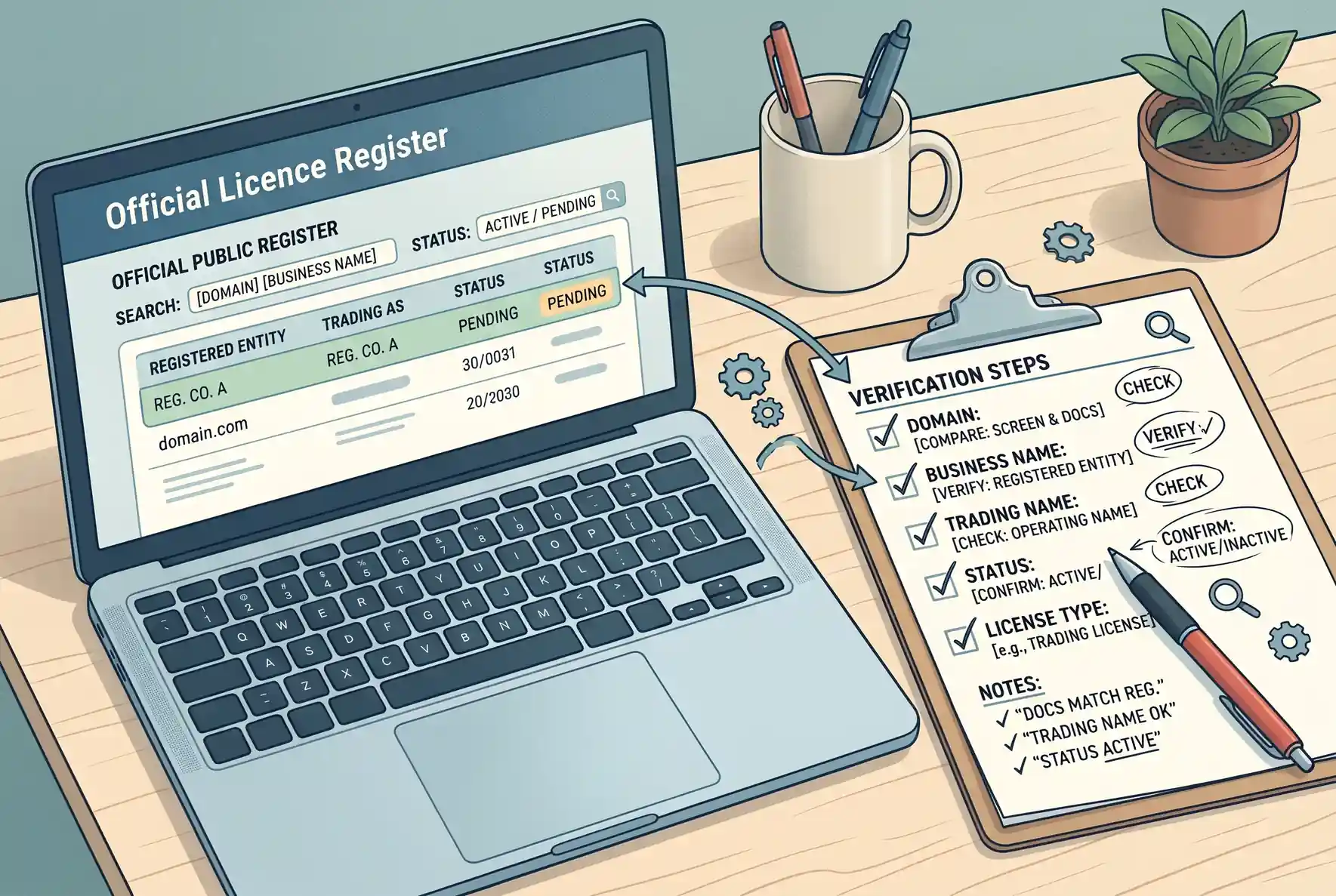
- Verify the licence number. The regulator’s own register is the only source. Screenshots and footer badges are not evidence.
- Read the withdrawal terms. Look for maximum withdrawal per week, per month, and per bonus. Any hard weekly cap under ВЈ5,000 is worth flagging on a serious deposit strategy.
That’s the entire list of things worth turning into bullet points. The rest belongs in prose, because it needs context.
A casino’s Trustpilot and Casino.Guru pages tell you more than the review score. Read the negative reviews specifically. Look for patterns — a single angry customer whose bonus was voided for max-bet violation tells you very little; three months of complaints about withdrawal delays tells you a lot. Look for operator responses. A casino that engages with complaints publicly, even to disagree, is a casino that knows it’s being watched.
Check the corporate ownership. The best offshore sites are open about which holding company operates them, and that company can be looked up in the Curaçao corporate register. Sites that hide behind shell companies with generic post-box addresses are exactly what they look like.
Test the support before you deposit. Send live chat a specific question about wagering requirements or KYC timing. Time the response, and read what the agent actually says. If they can’t answer a simple bonus question clearly, they will not handle a real dispute clearly either.
Finally, calibrate your first deposit to the risk you’re accepting. A ВЈ30 test deposit through Skrill will tell you almost everything you need to know about how a site operates, and it will do it without exposing anything you’d struggle to lose if the exit doesn’t work. Scale up on proven behaviour, not on marketing.
Responsible gambling without the UKGC safety net
Playing at a non-GamStop casino means playing without the layered UK consumer protections that most players don’t consciously notice until they’re gone. No ВЈ150 affordability trigger. No ВЈ5 stake cap. No mandatory reality checks on session length. No UKGC complaints route. No Financial Ombudsman Service jurisdiction if a dispute escalates. That’s not a hidden footnote; it’s the entire trade-off.
Substitute your own controls. Set a deposit budget in cash terms and stick to it. Use a separate account for gambling deposits so the cap enforces itself at bank level. If you find yourself topping up the account outside the plan, that’s the signal to stop for the day. Not the signal to try to win it back on the next spin.
If you or someone you know is showing signs of a problem, several UK organisations offer free, confidential support:
- GamCare — 0808 8020 133, gamcare.org.uk. Free 24/7 helpline, treatment support, and self-assessment tools.
- BeGambleAware — begambleaware.org. Independent charity funded by industry that runs the National Gambling Helpline.
- Gordon Moody — gordonmoody.org.uk. Residential and intensive treatment for severe gambling problems.
- Gamban — gamban.com. Blocking software that covers thousands of gambling sites including many that GamStop cannot.
If you registered with GamStop for a reason, honour that reason. Non-GamStop casinos are not a workaround for someone who took an active decision to keep themselves offline. Anyone telling you otherwise, including this page if it read that way anywhere above, has read you wrong. Gamban plus the exclusion is the sensible pairing while the block runs.
For anyone playing on the offshore market as a considered choice — not as a way around a self-exclusion — the responsibilities are yours to hold. That’s genuinely the deal. The freedoms come with the trade-offs. Play within limits you set in advance, treat every “bonus” as a marketing product, and remember that a casino running in Willemstad has less reason to care about a small dispute than a casino operating under a UKGC licence in London.
Closing thoughts on British casinos not on GamStop in 2026
The offshore market in 2026 is more mature than it was five years ago and more mature than it was even eighteen months ago. CuraГ§ao’s LOK reform did what its architects wanted it to do: culled the worst master-licence stubs, forced physical presence, put a real regulator in charge. Most of the shortlist above wouldn’t have looked the same in 2023. Some of the operators here didn’t exist in 2023.
That maturity has a limit. Non-GamStop casinos still operate outside UK consumer protection, still lack a UK dispute route, still trade regulatory oversight for commercial flexibility. Whether that trade suits you depends on why you’re looking in the first place. For a self-excluded player, the answer is no, and no amount of tidy design and fast crypto payouts changes that. For a considered player who never joined GamStop and who wants the ВЈ20 slot spin, the credit card deposit, the ВЈ5,000 blackjack hand, or simply a casino that doesn’t require a payslip when the ВЈ150 net-loss meter ticks over, the answer is more nuanced and the shortlist above is a serious place to start.
Read the terms. Verify the licence. Start with a small deposit. And treat the wagering multiple on any bonus as the truest sentence on the entire welcome page.