Analyzing Non Gamstop Casinos and Independent Licensing
 Available in GB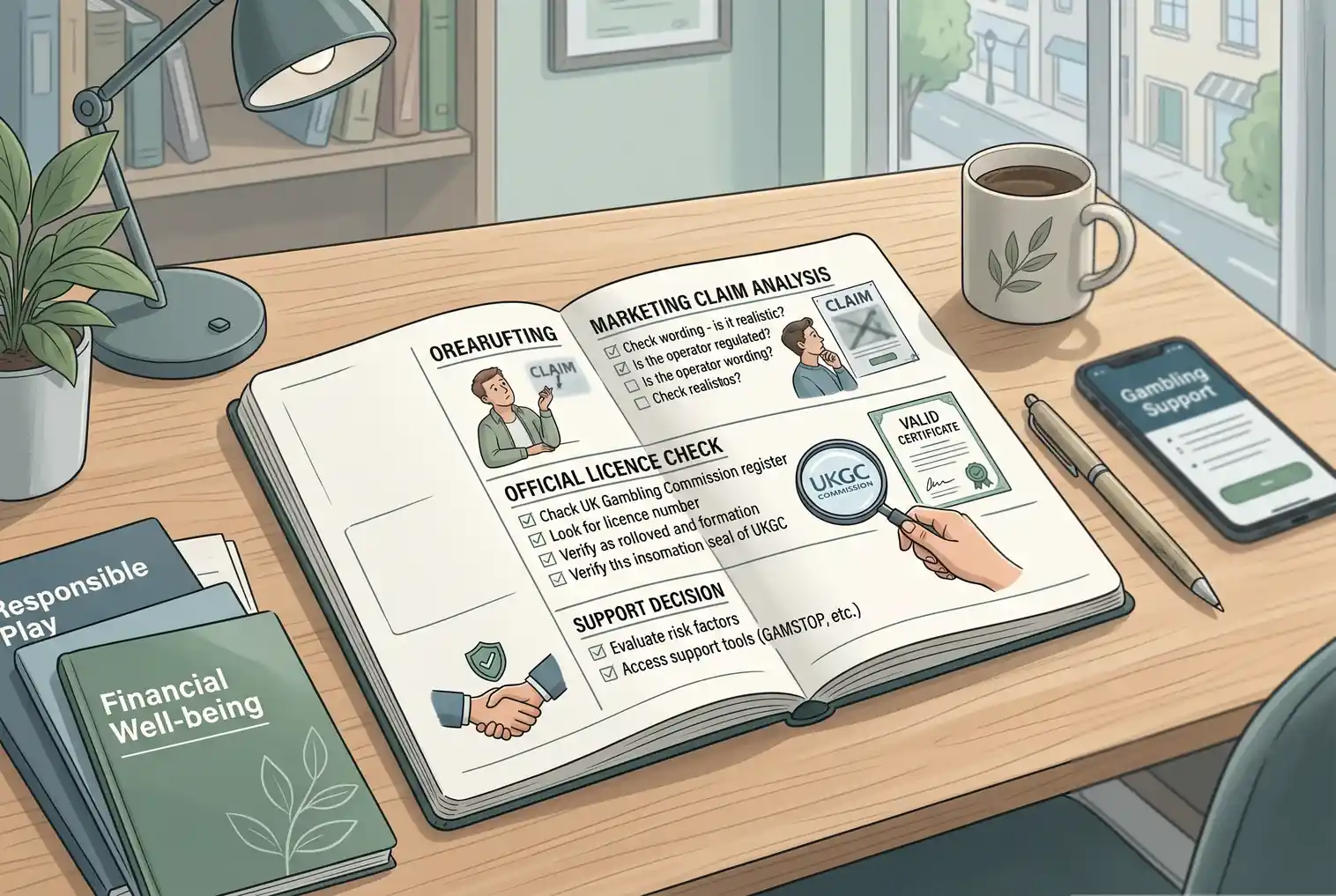
Assessing Independent Casino Security and Licensing Risks
GAMSTOP is part of the wider self-exclusion and blocking conversation in the UK gambling environment. A person may be looking at “not on GAMSTOP” pages for many reasons. Some are simply trying to understand unfamiliar wording. Others may be frustrated by an exclusion, a bank block, a spending limit or a cooling-off decision made earlier. Those situations are very different, and they should not be treated as if they are the same commercial shopping task.
A site being outside a particular self-exclusion scheme does not prove that the site is legal for you to use, fair in its terms, quick to pay, safe with documents, suitable for someone under financial pressure, or free from other restrictions. It also does not tell you whether the site’s domain is listed against a licensed business in the Gambling Commission public register. Treat the wording as something to verify, not as something to celebrate.
The safest first question is not “which site can I use?” It is “what exactly is being claimed, and why am I looking for it now?” If the honest answer is that you are trying to keep gambling despite a block, self-exclusion, debt problem or loss-chasing, the better next step is support and protective tools rather than another account.
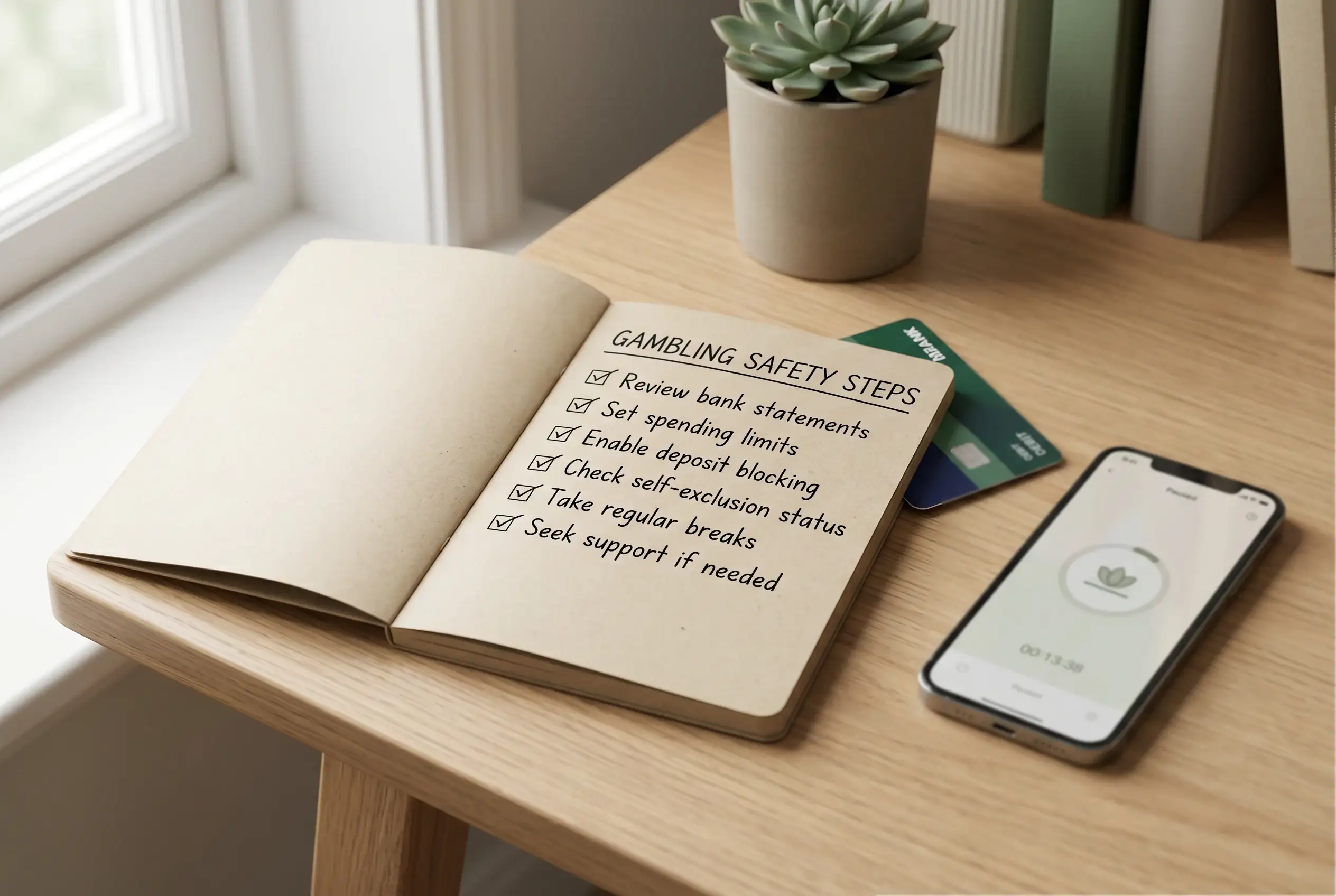
If you feel that your gambling habits are getting out of control, setting up bank gambling blocks and limits can provide an essential layer of protection.
Risk map for common wording
| Phrase you may see | What it may imply | What it does not prove |
|---|---|---|
| Not on GAMSTOP | The site claims it is not covered by the GAMSTOP self-exclusion scheme. | It does not prove licence status, fairness, payout reliability, customer-funds protection or suitability for a self-excluded person. |
| UK players accepted | The site claims it will allow sign-ups or play from people in the UK. | It does not prove that the exact domain is licensed for Great Britain or that every marketing claim is accurate. |
| Licensed casino | The site claims that some licence exists somewhere. | It does not tell you whether the licence covers the exact web address, whether the licence is from the Gambling Commission, or whether the licence is current. |
| Fast withdrawals | The site is making a service promise about payments. | It does not remove identity checks, document requests, withdrawal terms or the need to understand fees and limits. |
| No verification | The site may be using convenience language to reduce friction in the advert. | It does not mean identity, age, fraud, payment or regulatory checks can safely be ignored. |
The main pattern is simple: promotional wording often points to one narrow feature, while the real decision depends on several checks. A badge or phrase can start a question, but it should not finish the question.
Separate the four issues hidden inside the phrase
Self-exclusion and personal safety
If you have self-excluded, added a gambling block or asked your bank to block gambling transactions, that decision deserves respect. A protection tool is not a nuisance to defeat. It is a sign that gambling access has already become sensitive. Looking for a route around that tool can increase financial and emotional harm, especially when the search happens after losses, stress or pressure from debt.
Support does not need to wait until the situation is severe. If gambling feels hard to stop, if you are hiding it, if you are borrowing to continue, or if you feel urgency to reopen access, it is reasonable to step away and use help resources or blocking tools. This page will not provide tactics for avoiding those protections.
Licence and domain status
Licence wording should be checked through the Gambling Commission public register when the question is about Great Britain. You need to look beyond a logo in a footer. The important details are the business name, trading name, licence status, any listed web addresses and any register notes. If the domain you are using is not the domain shown in an official record, treat the mismatch as a serious warning.
A licence check has limits. It can help you verify official status, but it cannot make gambling affordable for you, guarantee a particular withdrawal experience, or prove that every term is favourable. It is the beginning of due diligence, not the end.
Commercial terms and money risk
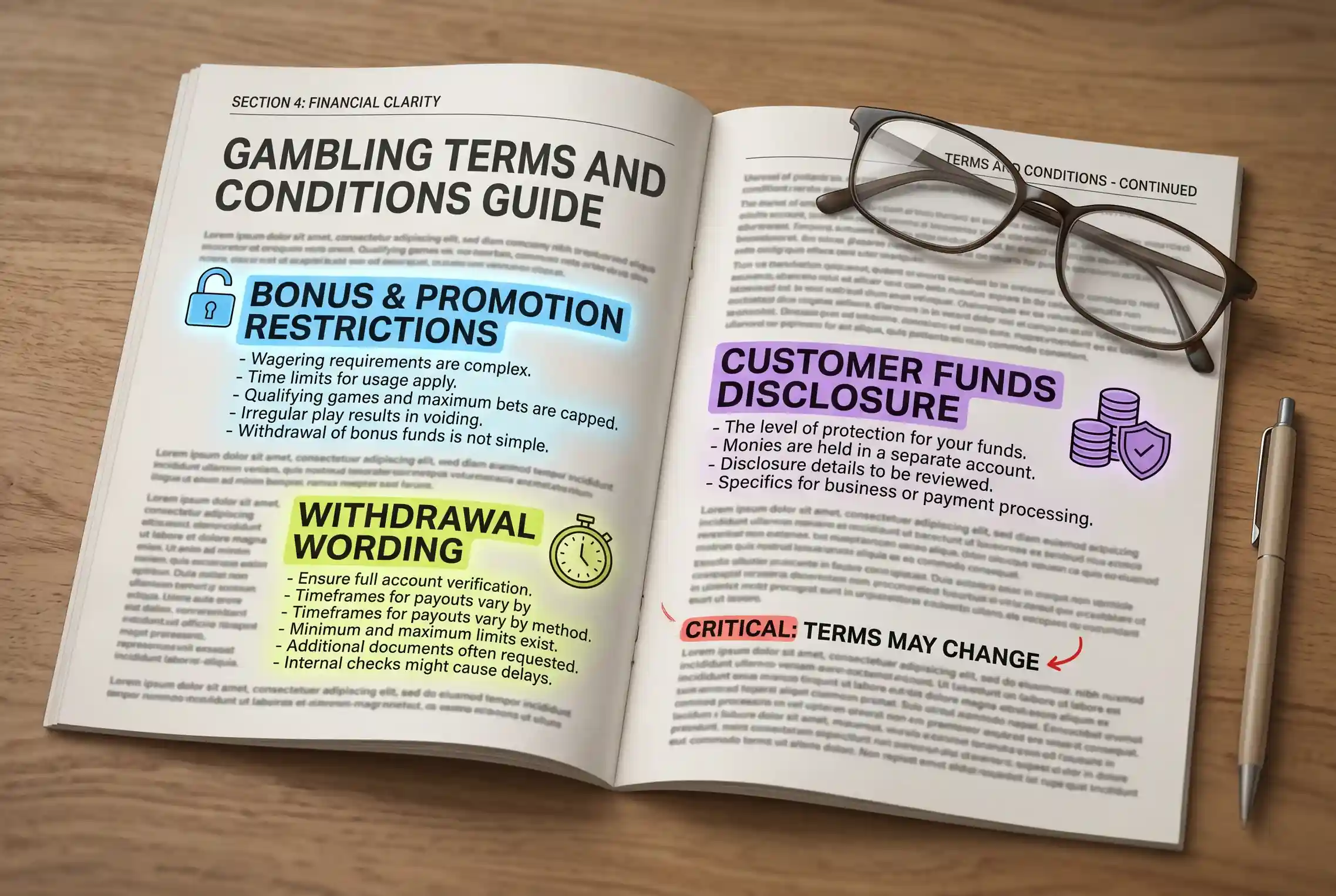
Terms matter because they decide how deposits, bonuses, withdrawals, dormant balances, document requests and account restrictions work. Before any deposit, the safer habit is to read the terms that apply before money is committed. If the wording is vague, scattered, hidden behind unclear links or presented only after sign-up, that is a reason to pause.
Customer-funds information is also important. Official guidance recognises different levels of customer-funds protection, and a disclosed rating should be read as a risk disclosure, not as a promise that nothing can go wrong. A person who cannot afford to lose the deposit should not treat any gambling balance as safe savings.
Complaints, documents and data
Disputes often become harder when the user has no record of what was shown at the time. Keep copies of the terms that apply, withdrawal messages, verification requests, chat transcripts and payment confirmations. Do not rely on memory or screenshots taken after the wording has changed. These records matter if you later need to complain or explain what happened.
A short decision path before you act
- Pause and name the reason. Are you trying to understand a phrase, checking a licence claim, or trying to continue gambling despite a block or self-exclusion?
- If a protection tool is involved, stop the commercial check. Use support or blocking resources instead of searching for another route to play.
- If you are checking a claim, start with the official register. Compare the exact domain, trading name and status. Do not rely on copied badges.
- Read the money terms before depositing. Look for bonus restrictions, withdrawal wording, fees, dormant-account rules and customer-funds information.
- Keep records. Save the terms, messages and transaction details before a disagreement appears.
This order matters because it prevents a common mistake: reading a commercial claim first and only later asking whether the basic facts are sound. If the reason for looking is linked to harm, the safest answer is not a better commercial checklist; it is a protective pause.
What this phrase should never be used to claim
- It should not be used to claim that a site is automatically lawful, reliable or suitable for UK users.
- It should not be used to imply that self-exclusion, bank blocks or spending limits are obstacles to defeat.
- It should not be used as a substitute for checking the Gambling Commission public register.
- It should not be used to promise easy withdrawals, no meaningful checks or a safer way to gamble under pressure.
- It should not be used to turn a person’s loss of control into a selling point.
Responsible wording matters because the audience may include people who are vulnerable, under pressure, or actively trying to avoid a protection they put in place for a reason. Clear information can still be practical without becoming encouragement.
When to use the deeper checks
If the basic meaning is clear and you are not trying to override a self-protection decision, the next practical step is to check the licence and domain claim. That check belongs on the licence page because it has its own method and its own limits. If a licence claim checks out, the next separate task is to read the terms, bonus restrictions and customer-funds statement before thinking about money.
If your concern is a delayed withdrawal, document request or account dispute, the answer is not on this page. You need the page about verification and withdrawals, or the page about complaints and records. If your concern is cookies, tracking, documents or data rights, use the privacy and data page. Keeping these tasks separate helps you avoid the false comfort of a single “safe or unsafe” label.
Support-oriented note
If you are reading this while feeling an urge to gamble, chasing losses, hiding spending, using borrowed money or looking for a way around a block, step away from the commercial decision. GambleAware and GamCare are recognised UK support organisations in the gambling-harm space, and bank gambling blocks or blocking tools can be part of a safer plan. You do not need to wait for a crisis before using support.
Always conduct thorough research before registering at any casinos not on Gamstop to ensure they meet basic safety standards.
The practical point is simple: a search term is not a duty to continue. You can stop at the meaning stage, protect your money, keep blocks in place and ask for help.