Configuring UK Gamstop Bank Blocks and Gambling Limits
 Available in GB
Table of Contents
Activating Bank Blocks and Effective Payment Restrictions
The most useful first question is simple: “Why am I trying to get access now?” If the answer is curiosity, you may only need a clearer explanation of the term. If the answer is that you have been blocked, self-excluded, hit a spending limit, lost money, borrowed money or hidden gambling, the situation is different. The search itself has become part of the risk.
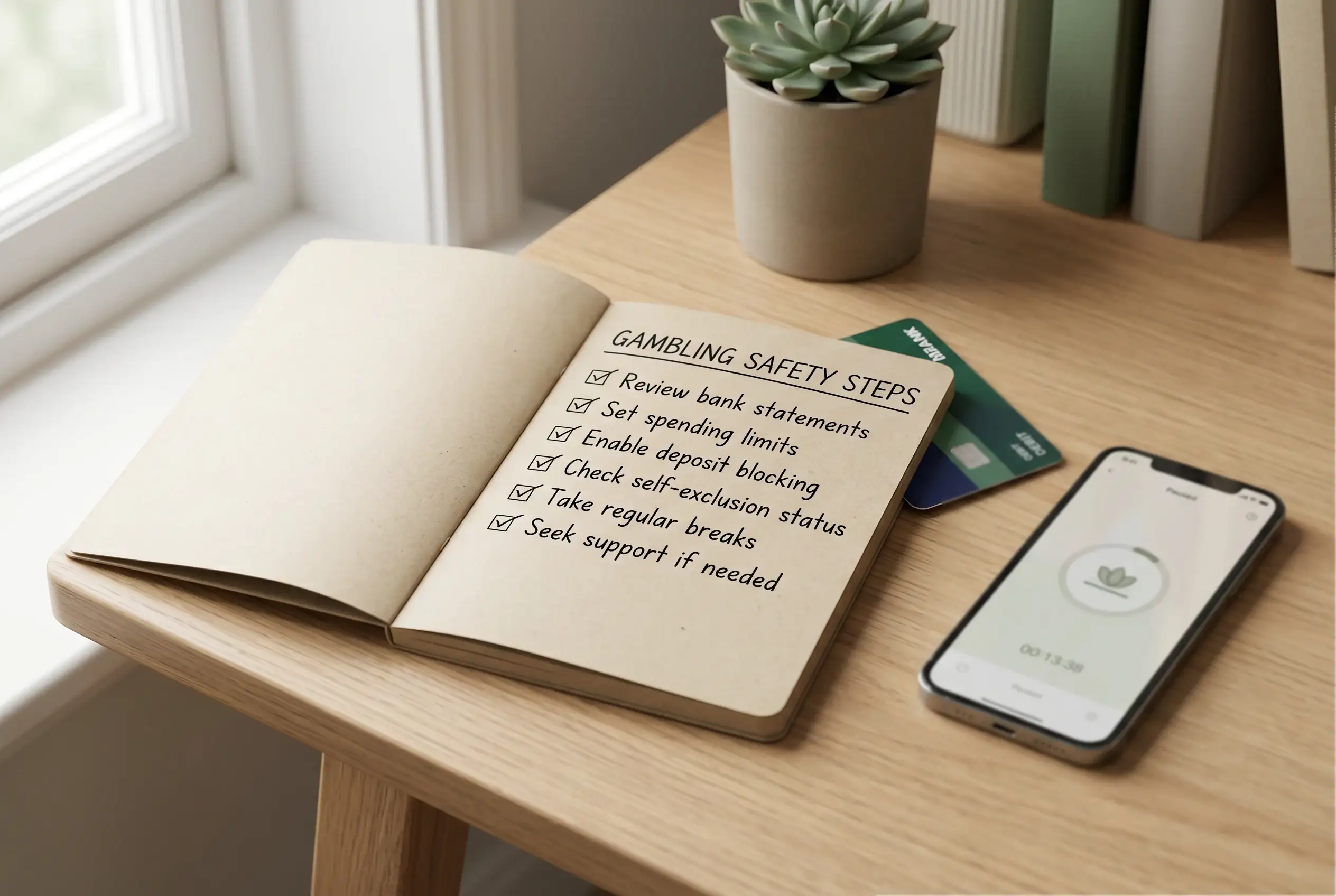
Protective tools work best when they are treated as support, not as puzzles to solve. GambleAware presents blocking tools as layered support, including online self-exclusion, blocking software, bank payment blocks and venue self-exclusion. The Gambling Commission also provides public information about banks that offer gambling transaction blocks, with bank-specific availability and steps. GamCare describes bank gambling blocks as tools many UK banks offer to help control gambling. Those facts should be framed carefully: availability and settings can differ, so you should check your own bank’s current instructions rather than assume every account works the same way.
Before seeking ways to bypass self-exclusion, it is vital to understand what not on Gamstop actually means in terms of player protection.
A decision path for a risky search moment
- Am I self-excluded or blocked? If yes, do not look for a workaround. Treat the block as a protection to preserve.
- Am I chasing losses? If you are trying to recover money quickly, step away. Chasing losses can make the next decision more harmful.
- Is a bank block active? Keep it active if it is protecting you from impulse payments. Check your bank’s official guidance if you need to understand how the feature works.
- Am I hiding gambling? Hiding spending, accounts or messages is a warning sign. It is a reason to seek support, not a reason to find less visible payment routes.
- Would I make the same decision tomorrow? If the urge feels urgent, delay the decision. A short pause can prevent a much larger mistake.
- Who can help me keep the barrier in place? Consider support organisations, blocking tools, bank controls and trusted people who can help reduce access.
How different protection layers fit together
| Protection layer | What it is for | What not to do with it |
|---|---|---|
| Online self-exclusion | Reducing access to gambling accounts covered by the scheme or arrangement. | Do not treat an uncovered site as an invitation to continue gambling. |
| Bank gambling block | Helping control gambling payments through a bank or card provider where available. | Do not look for alternative payment routes to defeat the purpose of the block. |
| Blocking software | Adding friction by blocking gambling websites or apps on devices. | Do not remove it during a moment of urge and call that a neutral choice. |
| Deposit, loss or time limits | Putting boundaries around gambling activity before harm escalates. | Do not open new accounts simply to avoid the limit. |
| Support conversation | Getting practical help when gambling feels hard to control. | Do not wait until the situation is severe before asking. |
No single layer solves every problem. The strength comes from combining them and making the next gambling step harder at the exact point when an impulse is strongest.
Signs that the search has become unsafe
- You are searching immediately after a loss and feel you need to win it back.
- You are trying to find a site because a self-exclusion or block is stopping you.
- You are considering borrowing, using rent or bill money, or hiding a payment.
- You feel angry at the block rather than relieved that it gives you time.
- You are looking for fewer identity checks so the activity is harder to notice.
- You are reading terms quickly because the urge to gamble feels urgent.
Any one of these is enough reason to stop the commercial search. The next safer action can be practical and small: leave the page, keep the block active, contact a support service, ask a trusted person to sit with you, or remove immediate payment access.
Verified support routes and how to use them carefully
GambleAware and GamCare are recognised support organisations in the UK gambling-harm space. They provide information about blocking tools, self-exclusion and help options. This page does not repeat unverified phone numbers, opening hours or medical claims. Use the organisations’ official websites for current contact routes and details.
When you use support, you do not have to present the situation perfectly. It is enough to say what is happening now: for example, that you are trying to get around a block, have lost money, are hiding gambling, or feel unable to wait. Specific honesty is more useful than a polished explanation.
If bank gambling blocks are relevant, use your own bank’s official app, website or customer support to understand the available feature. The Gambling Commission’s public page on bank blocks can help you identify that such tools exist, but the exact steps depend on the bank and account.
What this page will not help with
This page will not provide names of sites that accept self-excluded users, payment methods that avoid bank controls, device settings to defeat blocking software, or wording to persuade an operator to ignore verification. Those would turn a protective moment into a gambling access guide, which is not safe.
It is still possible to be practical without being promotional. If your aim is to understand the phrase “not on GAMSTOP”, read the meaning page. If your aim is to check an official licence claim, use the licence page. If your aim is to keep gambling despite a barrier, the safer action is to keep the barrier in place and seek support.
Finding reputable non Gamstop sites is challenging, which is why we emphasize safety checks over quick access.
A protective pause plan
- Close gambling tabs and do not open a new account today.
- Keep self-exclusion, bank blocks and software blocks active.
- Move payment cards away from immediate reach if that helps reduce impulse use.
- Write down the trigger: loss, boredom, stress, debt, secrecy or argument.
- Use official support resources for current help routes.
- Return to practical account issues only after the urge has passed, and only if the issue is not about defeating a protection.
The aim is not to shame the search. The aim is to make the next hour safer. A block that slows you down is doing useful work.