Data Protection and Privacy Policies at UK Casinos
 Available in GB
Table of Contents
- Managing Personal Data Sharing and Marketing Consent
- Cookies and similar tracking
- Privacy items worth checking
- Identity documents and account records
- Data rights and realistic limits
- Scenario: the site asks for documents and also uses non-essential tracking
- When a privacy concern becomes a complaint
- Safe next steps
- Related guides
- Common questions
Managing Personal Data Sharing and Marketing Consent
The safest approach is not to click through every privacy screen in a hurry. Slow down and separate three questions: what is needed for the account to work, what is optional, and what evidence you should keep if a dispute develops. A clear site should explain its privacy notice, cookie choices and identity-document process in ordinary language. If the explanation is hidden, vague or inconsistent across different pages, treat that as a reason to pause rather than a minor nuisance.
- Before accepting cookies: look for a real choice for non-essential cookies and similar technologies. Essential cookies may be needed to provide the online service, but analytics, advertising and cross-site tracking should be explained clearly and should not be bundled into a forced yes.
- Before uploading documents: read why the document is being requested, how to submit it securely, whether the name and address must match the account details, and what happens if the file is unclear or incomplete.
- Before depositing: check the privacy notice, account terms and withdrawal rules together. Do not assume that a fast sign-up means there will be no later verification or record-keeping.
- Before closing an account: do not assume that closure means every record disappears. Some information may be retained because of legal, regulatory, anti-money-laundering, fraud-prevention, complaint-handling or player-protection duties.
Cookies and similar tracking
Cookies are small pieces of information stored on a device. Similar technologies can include tracking pixels, local storage and tools that recognise a browser or device. Some are necessary for basic functions, such as keeping a session active or remembering a security choice. Others may measure usage, personalise content, support advertising or share information with service providers.
UK data-protection guidance treats non-essential cookies and similar technologies differently from essential ones. The practical point for a user is simple: a gambling site should tell you what those tools do and should ask for an active, informed choice where consent is needed. A banner that only says “we use cookies” is not enough to explain much. A better notice groups cookies by purpose, names important third parties where relevant, and gives a way to refuse or change optional choices without losing access to basic information.
Cookie choices also matter because gambling can be sensitive. A person may be looking into protection tools, comparing rules after a withdrawal problem, or trying to avoid impulsive decisions. Optional tracking can affect advertising and remarketing, so it is reasonable to check whether the site explains marketing cookies separately from necessary account cookies.
Privacy items worth checking
| Privacy item | What to look for | Why it matters | What not to assume |
|---|---|---|---|
| Cookie banner | A clear option to accept or reject non-essential cookies, with a link to details. | Optional tracking should be a real choice, not hidden inside a general button. | Do not assume “continue” means you have understood every tracking purpose. |
| Privacy notice | Who controls the data, what categories are collected, why they are used and who may receive them. | You need to know whether information stays with the operator or may be shared for payments, verification, fraud prevention, analytics or support. | Do not assume a short notice means less data is collected. |
| Identity documents | Why documents are needed, how they are uploaded, what quality is required and how the site handles mismatched details. | Age and identity checks can be part of a regulated gambling account, so document requests should be handled carefully rather than treated as suspicious by default. | Do not assume “no paperwork” marketing means no later checks. |
| Account records | How account activity, deposits, withdrawals, communications and safer-gambling actions are recorded. | These records may matter for withdrawals, disputes, complaints, protection reviews and regulatory duties. | Do not assume closing the account deletes all records immediately. |
| Data-rights route | A clear contact route for access, correction, objection, restriction or deletion requests. | Rights are easier to use when the process is visible and the operator explains how it handles requests. | Do not assume every request must be granted in full. |
| Marketing settings | Separate choices for email, text, phone, push notifications and advertising cookies where offered. | Stopping marketing messages can be important if gambling prompts are unwanted or risky. | Do not assume turning off email automatically changes every tracking or advertising setting. |
Identity documents and account records
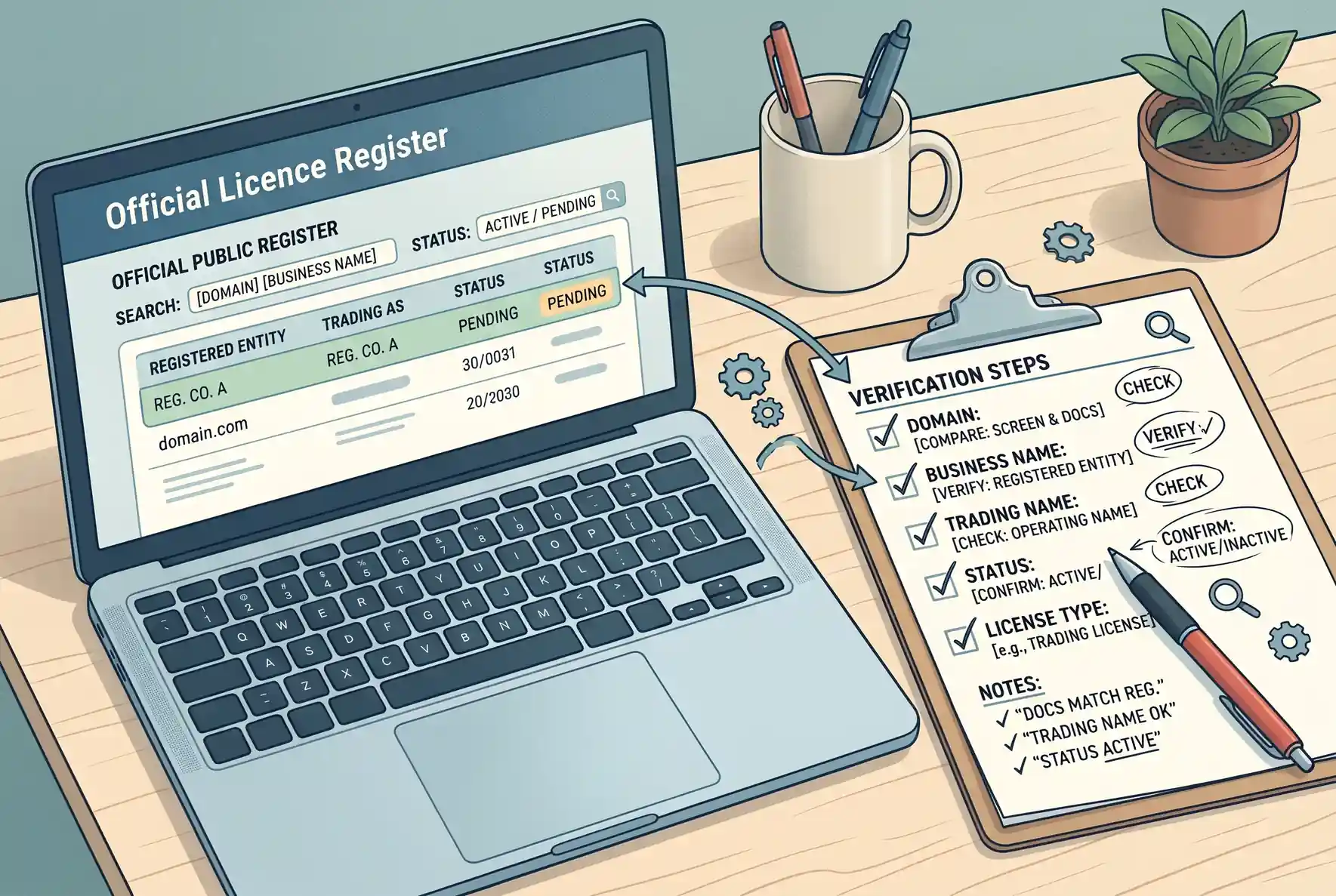
Gambling accounts can involve age and identity verification, and the need for checks should not be presented as a privacy failure on its own. The warning sign is not the existence of verification; it is a process that is poorly explained, inconsistent with the terms, insecure in practice, or used as a surprise obstacle after the user has already been allowed to gamble. A clear operator should explain the documents it may ask for, the reason for the request and the route for submitting them.
When you provide documents, keep your own record of what was requested and when you sent it. Save the message that asked for the document, the list of accepted document types, the upload confirmation if one is shown, and any later response saying the file was approved or rejected. Do not send extra documents simply because you feel pressured. If the request changes, ask what specific issue remains: unreadable image, address mismatch, name mismatch, expired document, payment-method ownership or another reason.
Document handling links closely to withdrawals, but this page is not about the mechanics of payment delays. For withdrawal-specific checks, use the page on verification and withdrawals. Here the privacy point is narrower: do not upload sensitive files until you know why they are needed, how the account process describes them, and how the site says it protects account data.
Data rights and realistic limits
UK data-protection law gives individuals several rights, including rights that may relate to access, correction, objection, restriction and erasure. The important word is “may.” These rights are qualified. In a gambling context, an operator may have legal or regulatory reasons to keep information even after a person asks for deletion or closes an account. That can include duties linked to licensing, safer gambling, anti-money-laundering controls, fraud prevention, complaint handling or record-keeping.
This is why public claims such as “delete all gambling history instantly” should be treated with care. A user can ask what information is held and why, but a responsible explanation should not promise that every account record, verification file or protection-related note will vanish on request. It is also risky to ask for deletion as a way to hide current gambling from someone who is helping you manage harm, debt or self-exclusion. In that situation, privacy matters still matter, but the immediate need may be support, banking blocks, gambling blocks or help from a trusted person.
If you make a data-rights request, write it plainly. State the account email or username, identify the right you want to use, explain the specific information or action you are asking about, and keep a copy. If the response refuses part of the request, look for the reason rather than assuming the refusal is automatically wrong. A refusal may be challengeable, but it can also be based on a legitimate limitation.
Scenario: the site asks for documents and also uses non-essential tracking
Imagine a site lets you browse offers and then asks you to accept cookies. Later, while creating an account, it asks for identity checks. These are two different decisions. You might refuse optional advertising cookies and still decide whether to continue with account verification. Refusing optional tracking should not be confused with refusing to prove your age or identity where verification is required.
- Open the cookie settings and identify what is marked necessary, analytics, advertising or personalisation.
- Reject optional tracking if you do not want it, then check whether the site still allows normal access to account information and terms.
- Read the privacy notice before uploading documents. Look for who handles verification and whether any third-party verification provider is mentioned.
- Check the account terms and withdrawal rules for document requests, payment-method ownership checks and account-name matching.
- Keep dated copies of the relevant screens and messages, especially if the request appears after a withdrawal attempt.
- If the explanation is unclear, ask a focused question before sending more information: what document is needed, why, and what problem the previous file did not solve.
This approach does not guarantee a particular outcome. It simply reduces confusion. It also helps you avoid treating every data request as either harmless or malicious. Some checks are normal; unclear or shifting explanations are what deserve closer attention.
When a privacy concern becomes a complaint
A privacy concern becomes more serious when the site ignores clear questions, gives conflicting explanations, keeps asking for unrelated documents, sends marketing after you have opted out, or refuses to explain why certain account records cannot be deleted. First, keep the issue specific. Write down the date, the account details, the request made, the response received and the action you want. Avoid sending emotional messages that make it harder to see the facts.
If the issue is mainly about a delayed withdrawal, disputed term or account closure, the complaints route may be the better starting point. The page on complaints and records explains how to organise evidence and when dispute escalation may become relevant. If the issue is about gambling control, urges to continue gambling, or a wish to bypass a block, the priority is not only privacy. The page on blocking tools, limits and help explains protective options without giving instructions for defeating them.
Safe next steps
- Read the privacy notice before creating an account, not only after a problem appears.
- Use cookie settings instead of accepting every optional tracker by habit.
- Keep records of document requests, upload confirmations and account messages.
- Do not rely on promises that gambling records or identity files can always be erased.
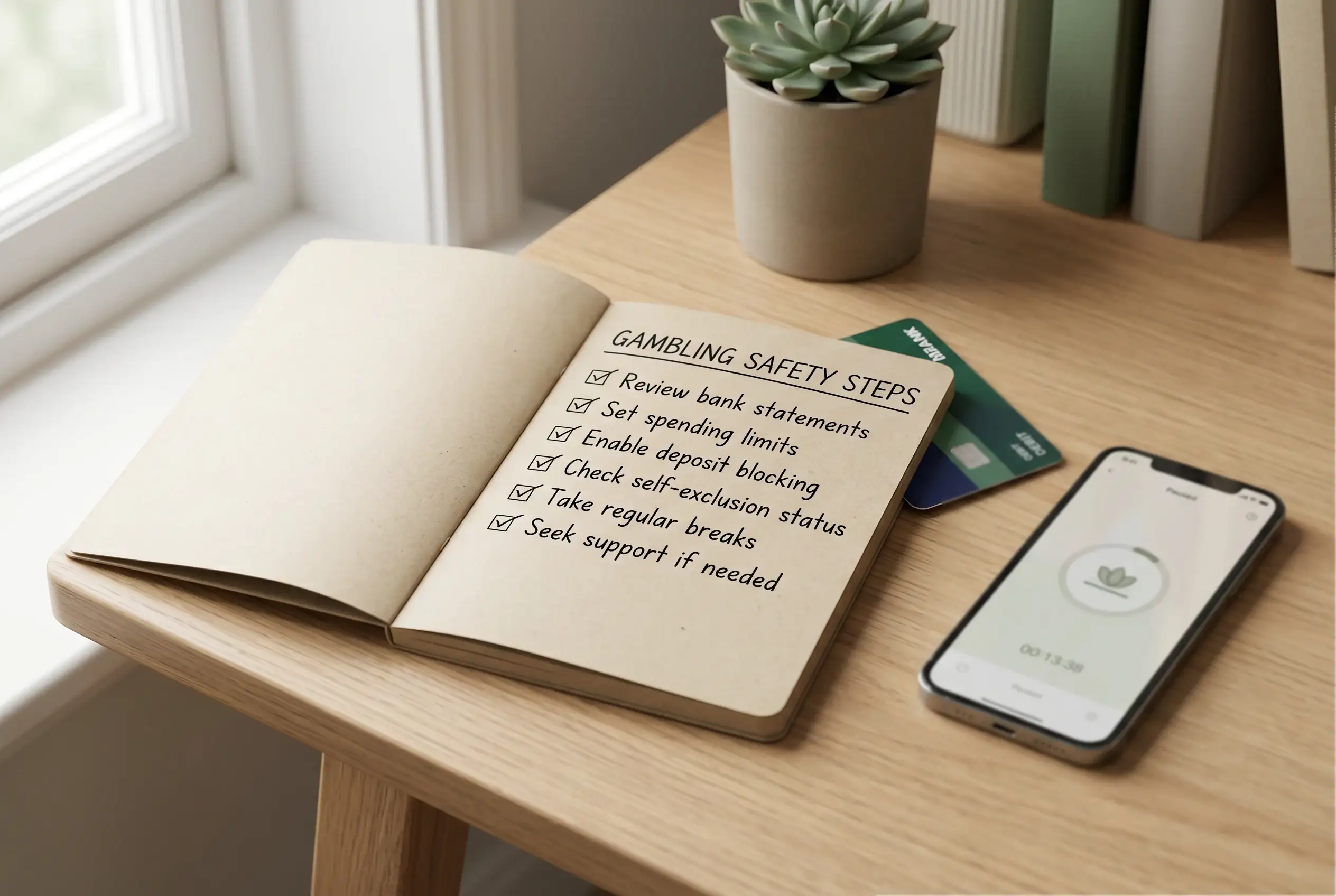
- If data deletion is being considered because gambling feels hard to control or hide, treat that as a support signal, not just a paperwork issue.
Related guides
- Verification and withdrawals: documents, timing and records
- Complaints and records: evidence to keep
- Blocking tools, limits and help: safer choices
Common questions
Can I refuse all cookies on a gambling site?
You can normally refuse optional cookies and similar technologies, especially those used for analytics or advertising. Some essential cookies may still be needed for security, login or basic service functions. The site should make the difference clear.
Does closing my account delete my verification documents?
Not automatically. Account closure and data deletion are different issues. Gambling operators may have legal or regulatory reasons to keep certain records for a period of time. Ask what is held, why it is held and which part of your request can be actioned.
Is an identity check always a bad sign?
No. Age and identity checks can be part of a regulated gambling account. A bad sign is a vague, shifting or insecure process, especially if the operator cannot explain why a specific document is needed.