Crazy Time Live Casino Game Show in the UK
See how Crazy Time’s host-led wheel format fits into a live casino and what to consider when exploring play, bonuses and betting plans.
 Available in GB

Table of Contents
- How the Crazy Time Show Fits into a UK Live Casino
- Top online casinos in the UK
- Finding Crazy Time at an Online Casino
- What a Crazy Time Casino Needs to Offer
- Playing Crazy Time Alongside Other Live Casino Games
- Crazy Time Strategy: What a Betting Plan Can and Cannot Do
- Free Play, Demos and What They Can Tell You
- Bonuses and Deposits: Read the Conditions Before the Headline
- Crazy Time Rules, Outcomes and the Limits of the Slot Comparison
- A Note on Complaints, Self-Exclusion and Market Funding
- slot
How the Crazy Time Show Fits into a UK Live Casino
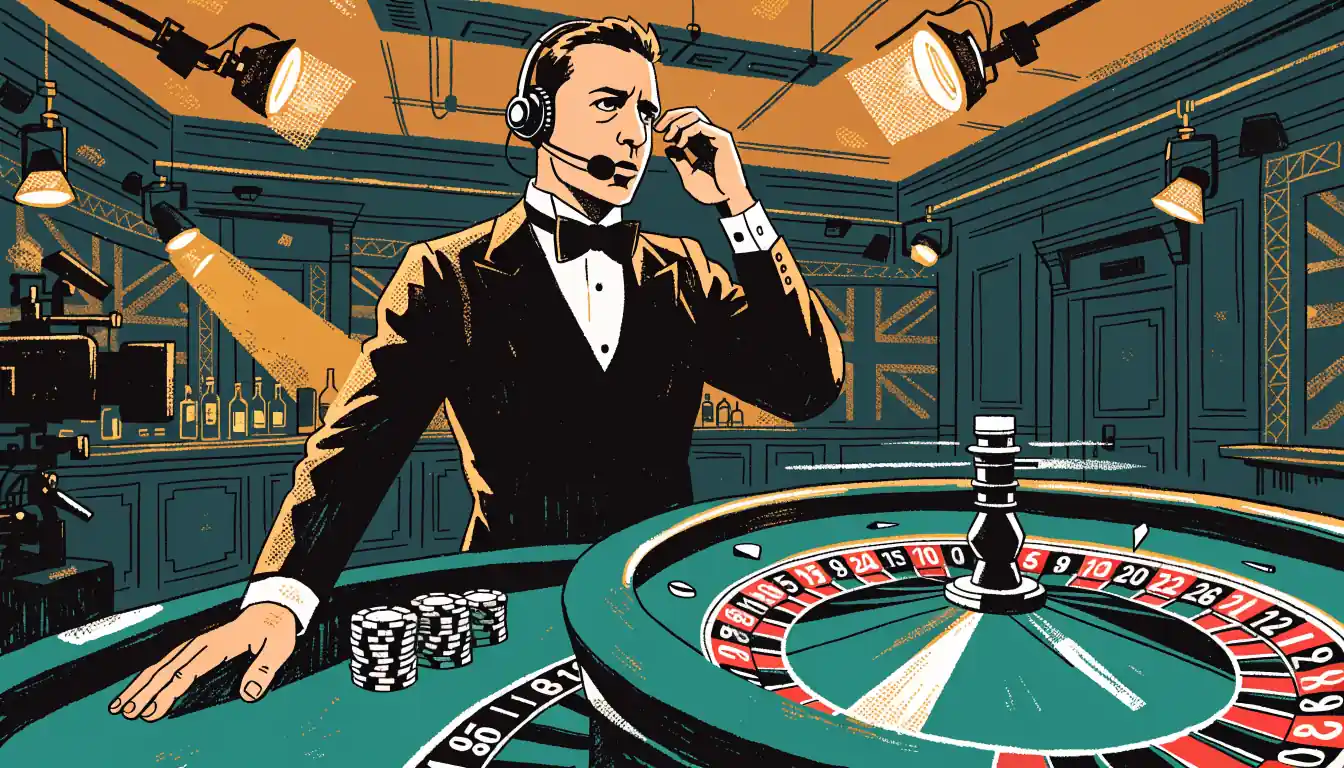
Crazy Time is a live casino game built around a presented show rather than the familiar layout of a card table. A host appears on screen, introduces the rounds and operates a large wheel, while the interface places the wagering choices beside the live video. That combination is what people generally mean by a live casino game show: a studio-led experience with casino wagering built into the broadcast.
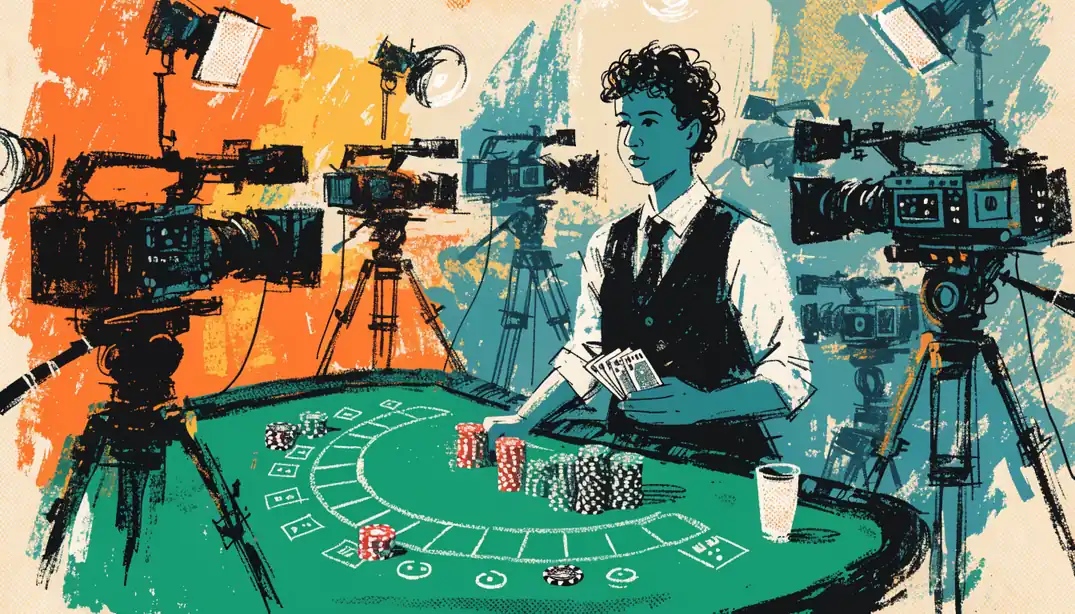
The distinction matters because “live casino” describes a broad category, not one particular style of game. In a conventional live table game, the camera follows a dealer handling cards or a roulette wheel, and the pace is shaped by the rules of that table. Crazy Time puts more emphasis on the host, presentation and visual sequence. It still sits within the live casino environment, but its show format is not interchangeable with a blackjack or roulette table.
I have found that the word “live” can do too much work in casino descriptions. It may tell the player that a real studio feed is involved, but it does not explain how a game feels to follow or what kind of interaction frames each round. For Crazy Time, the presentation is central: the host guides the broadcast, and the wheel provides the visible focus. The game is therefore easier to understand as a casino show with a wagering interface than as a standard table game with a camera attached.
That does not make it the whole live casino. UK operators have also offered conventional tables and other formats, with card games and roulette forming part of the wider selection. Grosvenor first introduced its live casino games in 2013, with offerings that included Blackjack, Texas Hold’em and Roulette. The milestone is useful context: live casino in Britain developed as a collection of different game types, not simply as a home for newer, studio-style shows.
Casino Games: Slots, Table Games and Live Casino
For someone comparing the formats, the practical difference is the rhythm of the screen. A table game tends to keep attention on the dealer’s actions and the table layout. A show game gives more screen time to its presenter and staged visual elements. Neither description says anything by itself about whether a particular game is suitable; it simply helps set expectations before opening it.
Crazy Time live casino UK searches often bring together two ideas that should be kept separate. “Crazy Time” identifies a specific show-style game, while “live casino” refers to the wider setting in which that and table games may appear. A casino Crazy Time listing is therefore one part of a broader catalogue, not a synonym for every live offering.
The industry language can make formats sound more alike than they are. On the operator side, grouping games under one live-casino heading is convenient; for the player, the useful question is what is actually on screen and how the round is presented. Show first. Table second.
Top online casinos in the UK
- AmunbetBonus: Join now and get 450% up to 2,700 GBP + 450 FS · Payout speed: 1-3 business days
- Revery PlayBonus: 100% up to€1,000+ 100 FS · Payout speed: 1-3 business days
- SpinFormulaBonus: 550% Up To £15,000 + 550 FS · Payout speed: 1-3 business days
- BeOnBetBonus: 100% up to €500 + 100 FS · Payout speed: 1-3 business days
- SlotoSportBonus: 500% up to £ 10 200+ 777 FS · Payout speed: 1-3 business days
- EvoSpinBonus: 125% up to €2500 + 125 Free Spins · Payout speed: 1-3 business days
- ZombillionBonus: Welcome Pack 250% up to £4000 + 200 FS · Payout speed: 1-3 business days
Finding Crazy Time at an Online Casino
Crazy Time is accessed through an online casino’s game lobby rather than as a standalone casino account. The operator hosts the account and the game catalogue; the game itself opens from the lobby, where it may sit under live casino or show-style games. On a phone, the route is much the same: sign in, locate the game, and open it in the casino’s site or app. Availability can depend on the operator’s catalogue and the way its lobby is organised, so a search box or category filter can be more useful than scrolling through every game.
Deal or No Deal Casino UK: Slots and Game Rules
That is the practical meaning of looking for an online casino with Crazy Time: the title needs to be present in the operator’s own catalogue, and the account must be able to access it. A page that mentions the game in promotional copy is not proof that it is available to play. I treat the lobby as the point of confirmation. If the game tile opens a product page, check that it leads into the actual game rather than a general description or an unavailable-game notice.
The more important check comes before account creation or payment. Remote operators that serve consumers in Great Britain must hold the relevant Gambling Commission licence. The requirement applies to the operator offering remote gambling, not merely to the company that makes a game or supplies the software. A familiar brand name, professional-looking website, or the presence of Crazy Time in a lobby cannot stand in for that licence.
I would search the UK Gambling Commission’s public register using the operator’s legal name and then compare the result with the brand and website address being used. Those details can differ: a consumer-facing casino name may not be the registered company name, and a domain can be operated by a company with a separate legal identity. The useful check is whether the licensed entity and the site’s operator match, not whether a similar name appears somewhere in a register. A mismatch needs resolving before an account is funded.
For a specific caution, a specialist review reported that the Commission’s public register dated 26 September 2026 did not identify LuckyPays under that brand or its stated domain, including luckypays.io. That is a dated register finding, not a general conclusion about every site or a substitute for checking the register directly. A listing can change, and the register is the place to verify the position at the time of access. The domain matters as well as the brand: a licence held by an unrelated business does not establish that a particular website is covered.
Crash Casino Games in the UK: How to Compare
Once the operator has been identified, the registration flow should make clear which company is opening the account and what terms govern it. The name shown during sign-up, the company information in the site footer and the entity found on the Commission register should be consistent or explainable. If the operator’s identity is hard to establish, the game catalogue is beside the point. Access is not the same as oversight.
The same distinction applies when a casino calls itself “UK-facing”. That phrase describes an intended audience; it does not demonstrate permission to offer remote gambling in Great Britain. A licence check is a verification step, not a recommendation, and it should happen before registration turns into a funded account. For anyone comparing a Crazy Time casino online, the order is simple: identify the operator, verify the relevant entry and website relationship, then confirm the game is actually available in its lobby. No shortcut.
What a Crazy Time Casino Needs to Offer
A casino listing Crazy Time needs to be checked as a gambling business, not judged by the game tile or the polish of its homepage. I start with the licence. In Great Britain, the UK Gambling Commission is the sole regulator for commercial gambling and oversees gambling activity, including online casinos. It issues operating licences to businesses and personal licences to relevant individuals. For remote gambling, the location of the operator’s equipment does not remove the requirement to hold the relevant licence when serving consumers in Great Britain.
The public register is the practical place to confirm that status. Search for the business name shown in the casino’s terms and check that the licence covers the relevant remote gambling activity. A brand name and the legal company behind it can differ, so a mismatch is a reason to investigate rather than proof by itself that a casino is legitimate. Check the licence number against the Commission’s register before depositing; a badge or a licence number printed on the casino’s site is not independent confirmation. The register matters. The logo does not.
DO
- Verify the operator’s licence on the UK Gambling Commission register
- Check that the brand name matches the legal entity on the register
- Set financial limits and use responsible gambling tools
DON’T
- Trust a casino based only on a badge or number printed on their site
- Use credit cards for gambling or to fund gambling wallets
- Assume a casino is safe just because it uses the phrase “UK-facing”
Account checks before play
Age verification is another basic control, not a courtesy. Operators must verify a customer’s age before allowing funds to be deposited into a gambling account. A site that accepts a deposit first and leaves age checks until later is not following the required process. The same applies when a registration screen presents verification as something that can be postponed until a withdrawal: the sequence is important.
Account controls should be visible once an account is open. Remote operators must prompt new customers to set a financial limit before their first deposit and make account-level limit controls accessible. These are not decorative settings hidden in a help page. Their value depends on being available where account decisions are made, and on being clear about what the control applies to.
Responsible-gambling tools are part of the service a licensed casino is expected to provide. Self-exclusion should be available, alongside account controls that support a player who wants to restrict their gambling. I treat the quality of these tools as a practical test: the terms should explain how they work, and the route to them should not depend on negotiating with a sales or retention team. A tool that is difficult to locate is less useful when it is needed.
Complaints and independent review
A casino’s complaints process deserves the same attention as its account controls. UKGC licensees must provide an internal route for complaints and access to an approved Alternative Dispute Resolution service. That gives a customer a path beyond the operator if an unresolved dispute qualifies for independent review. The casino should explain how to raise a complaint, how it handles the process and how to find the relevant ADR information.
This is different from a support chat answering a routine account question. Customer service can help with ordinary issues, but it is not a substitute for a formal complaints procedure or access to ADR. I look for those routes in the terms and help pages before relying on a site’s claims about support. The wording should identify a process, not just promise that concerns will be handled fairly.
Online Casino Games for Real Cash in the UK
These checks apply whether the casino is described as a Crazy Time site, a live-casino platform or an online casino with several products. The game name does not create a separate regulatory category. The Commission regulates remote gambling offered to Great Britain consumers, even if the operator or its equipment is based elsewhere. That is why a UK-facing casino cannot answer a licensing question simply by pointing to a different country’s permission.
None of these checks turns a casino into a recommendation. They establish whether the operator has the required regulatory standing and whether the essential account protections are in place. A polished lobby can show what is being sold; the register, account controls and complaints information show how the business is supposed to operate. I would check each before treating Crazy Time’s presence as a reason to open an account. The distinction is important.
Playing Crazy Time Alongside Other Live Casino Games
Crazy Time sits in a live-casino lobby alongside games with very different rhythms. Its central attraction is the show format: a host-led presentation built around a large wheel, rather than a conventional table where the dealer manages a familiar card or roulette layout. That distinction matters when comparing options. A shared live-video setting does not make every game feel alike.
The wheel gives Crazy Time a visual focus, but the wider category is not simply a collection of wheel games. Common Draw and Dream Catcher are other named titles that may appear in a live-casino selection. Their presence beside Crazy Time does not establish that they follow the same rules or offer the same style of play. Game names and presentation can signal a broad format; the actual rules and available wagers still need to be checked in the game itself.
Infinite Blackjack and Lightning Roulette provide a different point of comparison. Their names connect them to recognised table-game formats, so they may suit someone looking for blackjack or roulette within a live presentation. They should not be treated as interchangeable with Crazy Time merely because all are grouped under live casino. The show-led wheel experience and a table-game session have different structures and visual cues.
Show-led play versus table games
Blackjack and roulette remain familiar reference points in a live casino. Blackjack centres on decisions made against a dealer’s hand; roulette centres on wagers connected to the wheel and its outcome. Crazy Time also places a wheel at the centre of the screen, but its identity is that of a game show rather than a standard roulette table. The shared object is not the same game.
Casino Dice Games in the UK: Rules and Formats
That difference affects what the screen communicates. In a table game, the layout is organised around cards, a betting area or a roulette wheel. In Crazy Time, the host and show presentation are part of the experience, with the wheel serving as its visual anchor. Someone moving between games may find the change in pace and interface more significant than the fact that both are streamed live.
A live-casino menu can therefore be useful as a map, not a verdict. It places show-led titles and traditional table formats in one place, but it does not tell the whole story about a particular game. The title, studio presentation and lobby category are not substitutes for reading the rules before wagering.
When looking for where to play Crazy Time live, the relevant distinction is between finding the game in a casino’s live section and deciding whether its format suits the session. A lobby can group it with other live games, while the actual experience remains quite unlike blackjack or roulette. The same applies when comparing it with Common Draw, Dream Catcher, Infinite Blackjack or Lightning Roulette: these are alternatives in the broader selection, not a ranking and not a promise that every casino carries them.
I have seen menus make different games look more alike than they are. A shared label smooths over the differences. That is the point to remember when choosing between Crazy Time and a conventional live table: the category is broad, the formats are not.
Crazy Time Strategy: What a Betting Plan Can and Cannot Do
A sensible Crazy Time live casino strategy is about controlling decisions, not finding a pattern that predicts the next result. The game’s history may show what has happened, but previous outcomes do not establish what will happen next. A tracker can organise past results; it cannot turn them into a reliable forecast. I treat that distinction as the line between keeping records and believing the records offer an edge.
The same applies to strategies built around increasing or changing a wager after a loss. A sequence can feel as though it is “due” to turn, but that feeling does not make a future result more likely. Nor does a tracker identify a safe moment to raise stakes. It records. Nothing more.
Attention Previous game outcomes do not determine future results; trackers record history but cannot predict outcomes.
Make the plan about money and decisions
Before playing, set an amount that can be lost without affecting essentials, then decide how much of that amount can be risked in a session. The required warning is plain: gamble only what can be afforded to lose. A plan is useful when it makes that boundary easier to keep, not when it gives a loss a new name or justifies chasing it.
I have seen how “flexible” can sound attractive in promotional language. In practice, flexibility often means there is no stopping point built into the decision. A written session budget, a stopping point and a pause when concentration slips are more concrete. They do not improve the game’s odds or guarantee a return. They limit the scope for an impulsive decision to expand.
It also helps to separate a chosen wager from the balance left in an account. A larger balance is not a reason to raise the wager, and a recent win is not evidence that the next one is more likely. If the planned limit has been reached, the plan has done its job. Stop there.
Do not confuse game categories
A common mistake in casino strategy is to transfer rules from one kind of game to another. A specialist gambling review describes the Great Britain online-slot stake caps as £5 in a game cycle for adults aged 25 and over, and £2 for those aged 18 to 24. The same review distinguishes roulette and blackjack: those slot-specific caps do not govern either table game.
That distinction matters because Crazy Time should not be treated as a slot simply because it has a wheel, rounds and changing outcomes. Slot rules cannot be assumed to apply to every live casino game. Equally, the fact that a limit does not apply to roulette or blackjack is not a recommendation to wager more there. The controls in a personal plan still matter.
For Crazy Time, strategy is therefore best understood as bankroll and decision management. It can help define what is at stake, prevent chasing and make stopping less negotiable. It cannot predict an outcome, remove uncertainty or guarantee profit. Trackers can make a record clearer; they cannot make chance answer back.
Mines Casino Game UK: How It Works and What to Know
Free Play, Demos and What They Can Tell You
A free version of Crazy Time can be useful for learning where controls sit and how the screen is organised, without committing money to a round. That is a narrow but practical purpose. A demo is an orientation tool, not a preview of what real-money play will return.
I treat these modes as a way to get familiar with the interface: where a wager is entered, how selections appear on screen, and where the game displays its controls and information. The exact setup can differ between versions, so time spent in a demo does not prove that a particular casino’s real-money table will look or behave identically. Nor does a smooth demo establish that the operator is safe.
That distinction matters because “free” describes the cost of the play mode, not the quality of the casino or the value of a later offer. A free-play screen may be available without an account, or it may sit behind a casino’s registration process. The label alone does not explain what information is collected, whether the mode is provided by the operator or game supplier, or whether access is subject to terms. Check the wording on the page itself rather than assuming every free version works the same way.
What a demo can show
A demo can help clarify basic navigation before any real-money decision is made. It may make the layout less unfamiliar and show how the displayed controls respond. That can be enough to decide whether the presentation is understandable and comfortable to follow.
It cannot establish likely results. A run of demo outcomes is not a forecast, and a short session cannot show what a later real-money session will produce. Treating a sequence of wins or losses as a pattern is a common mistake: each display belongs to the session being observed, not a promise about the next one. A demo is not a testing ground for a reliable system.
Free access also should not be confused with “free spins”. That phrase can refer to a promotional condition rather than an unrestricted demo, and the offer may carry separate terms. The mechanics of a promotion belong to its written conditions, not to the fact that a game can be opened without paying. I keep those two things separate. Different purpose.
Chicken Road Game Casino UK: What to Check
What reviews can and cannot settle
A Crazy Time casino review can help organise practical questions about access, presentation and stated terms, but a review is not a substitute for checking the operator’s own current information. Reviews can describe a particular experience; they cannot make an operator’s licence valid, or confirm that every account will encounter the same conditions. That is why review language such as “safe” needs translating into specific checks rather than taking it as a guarantee.
Free play also does not replace the real-money checks covered elsewhere on this page. Before depositing, the operator’s identity, licence status and account conditions still matter. A demo can tell something about the interface. It cannot answer those questions.
If the game is available only after creating an account, that is no longer simply a matter of trying a screen. Registration brings the operator’s terms and data practices into play, while depositing is a separate financial decision. There is no need to cross either boundary merely to learn whether the interface is legible.
The useful outcome of a demo is modest: less uncertainty about the controls and no conclusion about future results. I would not use a free session to judge the fairness of a casino, estimate returns, or infer that a promotional offer is worthwhile. Those decisions depend on information the demo does not provide.
Bonuses and Deposits: Read the Conditions Before the Headline
A Crazy Time casino bonus can look straightforward in a banner: a deposit offer, a welcome package or a no-deposit promotion. The headline describes the attraction, not the full deal. I read the terms as a separate contract: they determine which games qualify, how the bonus is credited, and what conditions apply before any resulting balance can be withdrawn.
For a deposit bonus, check whether the offer requires a particular payment method, whether the qualifying deposit must be made in one transaction, and whether Crazy Time contributes to any playthrough requirement. The wording may distinguish cash balance from bonus funds, or exclude some games altogether. “No deposit” does not mean “no conditions”; it may still involve eligibility rules, a limited claim window or restrictions on withdrawing winnings. Those details belong in the offer terms, not the banner.
Payout wording needs the same care. A promotional claim about casino payouts does not explain how a bonus affects withdrawal eligibility. Check whether accepting the offer changes the withdrawal process or leaves bonus funds subject to conditions. If the terms are unclear, treating the headline as the operative promise is a poor basis for a money decision.
JetX Casino Game UK: How It Works and What to Check
The payment route matters too. UK gambling operators cannot accept credit cards for gambling, including when a credit card is used to fund a wallet or money service that then pays the casino. A wallet is not a workaround if it allows credit-card funds to be used for gambling. The payment option and its funding source should be clear before a deposit is attempted.
There is another step before that first deposit: operators must prompt new customers to set a financial limit. They must also make account-level limit controls accessible, so a limit can be reviewed and managed within the account. I treat this as part of the deposit decision, not an afterthought. The amount available to spend should be considered before any promotional offer is accepted.
“Welcome” is sales language. The conditions decide what it means.
Crazy Time Rules, Outcomes and the Limits of the Slot Comparison
A useful explanation of Crazy Time live casino rules starts with a distinction: a show format is not automatically an online slot. The relevant rules are the game’s own, as presented by its operator, rather than rules that apply to a different product category. I would check the displayed instructions before wagering, especially where they define eligible choices, how a round is settled and what the game calls a multiplier. A title alone does not establish those details.
“Multiplier” is not a complete description of an outcome. Its meaning depends on the game’s stated rules: what it applies to and when it is applied. Likewise, a score shown during a live round should not be treated as a promise of a particular return. The precise meaning of any score or multiplier needs to come from the game’s own information, not from assumptions borrowed from another casino game. Small print matters.
This distinction also matters when comparing Crazy Time with online slots. In Great Britain, online slots cannot offer autoplay, and at least 2.5 seconds must pass from the start of one game cycle before another can begin. Those requirements concern online-slot play. They do not, by themselves, define Crazy Time’s round structure, timing, scores or multiplier rules. Applying them to a live game show simply because both products are offered online would confuse categories.
For a trusted casino, separate two checks: whether the operator is authorised for the relevant market, and whether the game’s own rules are clear enough to understand before play. A casino’s description may summarise a feature, but the in-game rules are the appropriate place to confirm how a round works. If a term such as “score” or “multiplier” is left unexplained, promotional wording cannot fill that gap. Read the rule, not the gloss.
A Note on Complaints, Self-Exclusion and Market Funding
A UKGC-licensed casino must provide a self-exclusion option and a route to make a complaint through its own process. If the issue remains unresolved, the operator must provide access to an approved Alternative Dispute Resolution service. Licensed operators also contribute to the Research, Education and Treatment levy, which funds work addressing gambling-related harm. These safeguards are part of the regulatory framework, not a promise that a complaint will produce a particular outcome.
slot
A “best” Crazy Time casino is not simply the one that puts the game near the top of its lobby. That label says little about the experience after opening an account: the important distinction is between a prominent game tile and a service that can legally offer real-money gambling to customers in Great Britain. The UK Gambling Commission regulates commercial gambling in Great Britain and issues operating licences to businesses, as well as personal licences to relevant individuals. Remote operators serving the market need the relevant Commission licence, wherever their key equipment is located.
I have seen promotional language do a lot of work while leaving the practical question unanswered. A casino may describe a game as a highlight, attach a bonus banner, or use “recommended” without explaining what determines that recommendation. Those labels are not evidence of better Crazy Time results, a more favourable outcome, or a licence. Separate the claims: game availability is one matter; operator status and the conditions attached to an offer are others.
What “best” can reasonably mean
There is no single measure that makes one Crazy Time casino the best choice for every player. A more useful comparison starts with verifiable points: whether the game is listed for the relevant account, whether the operator’s licence details can be checked on the Gambling Commission’s public register, and whether the site explains its account and payment conditions clearly. These checks do not predict results. They establish what is being offered and who is responsible for offering it.
That is also why a list of “best casino sites” can mislead when it is built from promotional placement alone. A game appearing in a lobby is not the same as an independent endorsement. Nor does a bonus headline show whether the offer fits a particular account or how its terms work. I treat the headline as an invitation to inspect the underlying conditions, not as the conclusion. Different question.
Results are not a report card
Searches for Crazy Time results can mean several things: a result from a particular round, a record of previous outcomes, or a claim that past outcomes reveal what is likely to happen next. Those meanings should not be blurred. A displayed result describes an outcome that has already occurred; it does not establish what a later round will produce.
I would also be cautious about any casino presentation that makes results look like a measure of operator quality. A casino does not control a game outcome simply because it hosts the game, and a run of results is not proof that an account, site, or strategy is more reliable. Past outcomes can be interesting to review, but they are not a forecast. No pattern can turn uncertainty into certainty.
The same distinction applies to comparisons between casinos. If one page shows a result and another does not, that alone does not prove that one operator offers better odds or better service. The useful evidence concerns the operator’s status and the terms of the service, not a selective presentation of past rounds. Results are not rankings.
Bonuses and the real-money decision
Crazy Time casino bonuses can look like a reason to choose one site over another, but a headline offer is not a substitute for understanding its conditions. Promotional wording tells only part of the story; the linked terms explain what the offer applies to and what requirements attach to it. A bonus cannot make a casino’s licence status irrelevant, and it cannot make results predictable.
I keep these decisions separate: first establish that a real-money operator is authorised for the Great Britain market, then assess the offer on its stated conditions, and only then decide whether the game itself is wanted. A bonus is a commercial feature, not a signal that a casino is objectively “best”. Any play should remain within money that can be afforded to lose.
Are online casino games licensed and regulated?
Yes. The UK Gambling Commission regulates online gambling in Great Britain, and remote operators serving consumers there must hold the relevant licence.
What are the online slot stake limits in Great Britain?
The limit is £5 per game cycle for adults aged 25 and over, and £2 for adults aged 18 to 24. These limits do not apply to roulette or blackjack.
Is LuckyPays licensed by the UK Gambling Commission?
The Commission’s public register dated 26 September 2026 did not list LuckyPays under that brand or its stated domain, including luckypays.io. Check the register directly for the current position.