Online European Roulette in the UK: Rules and Odds
A clear guide to European roulette’s layout, single-zero bets, online and live formats, and the terms that can affect a casino bonus.
 Available in GB
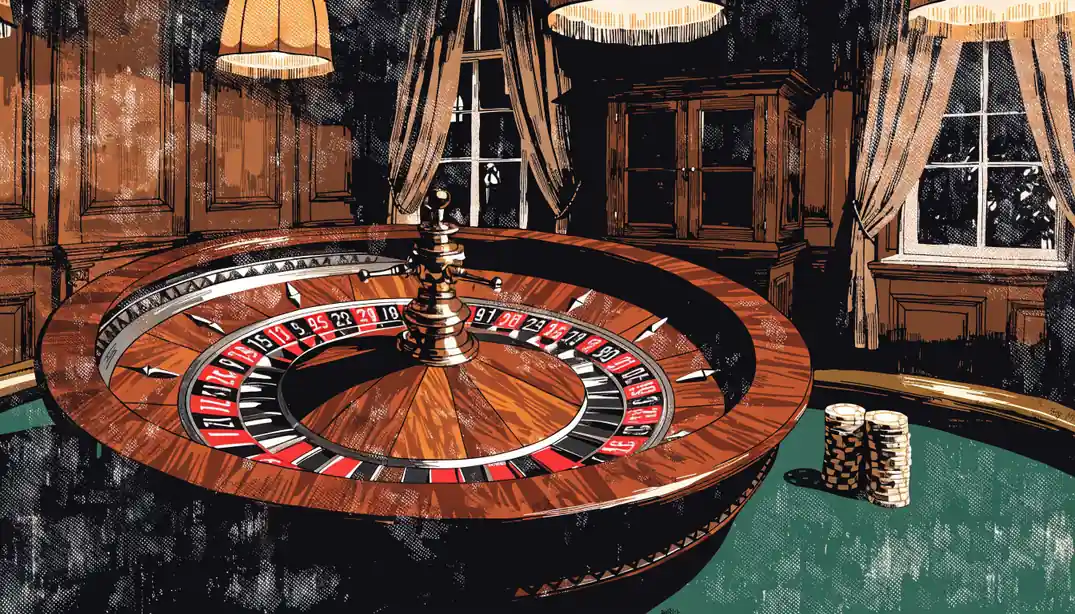
Table of Contents
- European Roulette: One Zero, 37 Pockets and the House Edge
- Top online casinos in the UK
- Reading the European Roulette Table Layout
- Single-Zero Bets: What Pays and What the Odds Mean
- Playing European Roulette Online: RNG, Stakes and Pace
- Live Dealer Roulette: The Physical Wheel on Screen
- European, American and French Roulette Compared
- Roulette Bonus Terms: Contribution, Exclusions and Limits
- Choosing a UK Casino for European Roulette Without a ‘Best’ List
- European Roulette Wheels: What the Format Tells You
- Roulette Demos and Themed Game Versions
European Roulette: One Zero, 37 Pockets and the House Edge
A European roulette wheel has 37 pockets: one marked zero and 36 numbered from 1 to 36. The numbers are divided between red and black; zero is green. That single green pocket is the detail that sets the wheel’s basic mathematics. It gives the casino an advantage while leaving the familiar numbered outcomes in place.
The house edge is 2.70%. This is a mathematical feature of the game, not a fee taken from each spin. It describes the long-run difference between the amount wagered and the amount returned across many plays. A short session can produce a very different result: roulette outcomes are random, and a run of wins or losses does not have to match the long-run expectation.
I used to see the house edge described as if it predicted what would happen to an individual balance. It does not. It is a statistical measure of the game, calculated from its rules and payouts. A player might finish ahead or behind; the edge does not say when, or by how much, that result will occur.
Why one pocket matters
Most roulette bets cover one or more numbered outcomes, while zero remains its own outcome. When the ball lands there, it can defeat bets that would otherwise win on a red or black number, an odd or even number, or a low or high number. Those bets cover broad groups of the numbered pockets, but not the green zero.
That extra losing outcome is what creates the casino’s mathematical advantage on standard European roulette. The wheel does not need to be biased, and the dealer does not need to influence the ball. The edge follows from the combination of possible outcomes and the payouts set by the game.
The 37-pocket count also explains why the house edge is not the same as the chance of losing a particular spin. The edge takes account of both the chance of an outcome and what a winning bet pays. A bet can cover several pockets and still carry a cost in the long run because its payout is set against all 37 possible results.
Casino Games: Slots, Table Games and Live Casino
The distinction matters. Counting covered pockets alone gives only part of the picture; the payout completes the calculation. No bet changes the wheel’s result, and no betting pattern can make the zero disappear.
A long-run measure, not a forecast
The 2.70% figure is useful for comparing the standard European game with other casino games, but it should not be read as a personal loss rate for a single visit. Results vary from spin to spin. Even a long sequence can land far from the average expected across repeated play.
In practical terms, the house edge means the rules favour the casino over time, not that every player loses every session. That is why a winning spell does not prove that a system has found an advantage, and a losing spell does not make a win due on the next spin. Each result is determined by chance.
I have seen betting systems presented as a way to overcome this arithmetic. A system may change the size or timing of stakes, but it cannot alter the pocket count or the game’s payouts. Increasing stakes after losses can also expose a bankroll to a sharper fall if the losing run continues. The wheel keeps its rules.
For anyone comparing an online European roulette game with a physical version, the key feature is the same: one zero among 37 pockets. An online game may represent that wheel through software or show a physical wheel on screen, but the format alone does not change the underlying mathematics when the same rules and payouts apply.
That is the useful starting point for understanding European roulette: the zero is not just another number on the wheel. It is the extra outcome that gives the casino its edge. The arithmetic is fixed; the sequence is not.
Top online casinos in the UK
- AmunbetBonus: Join now and get 450% up to 2,700 GBP + 450 FS · Payout speed: 1-3 business days
- Revery PlayBonus: 100% up to€1,000+ 100 FS · Payout speed: 1-3 business days
- SpinFormulaBonus: 550% Up To £15,000 + 550 FS · Payout speed: 1-3 business days
- BeOnBetBonus: 100% up to €500 + 100 FS · Payout speed: 1-3 business days
- SlotoSportBonus: 500% up to £ 10 200+ 777 FS · Payout speed: 1-3 business days
- EvoSpinBonus: 125% up to €2500 + 125 Free Spins · Payout speed: 1-3 business days
- ZombillionBonus: Welcome Pack 250% up to £4000 + 200 FS · Payout speed: 1-3 business days
Reading the European Roulette Table Layout
A European roulette table has two distinct parts: the betting layout, where chips are placed, and the wheel, where the ball lands. The layout translates the wheel’s numbered outcomes into betting areas. It does not change the result or determine the odds by itself.
The table layout translates the wheel’s numbered outcomes into betting areas, but the wheel’s sequence differs from the order shown on the table.
The central grid displays numbers 1 to 36 in three vertical columns, with the numbers arranged in alternating red and black squares. A separate green zero sits at one end of the grid. This arrangement makes the numbered area easy to scan, but it is not a miniature map of the wheel: the wheel’s sequence differs from the order shown on the table.
Thin lines divide the grid into places for bets covering one or more numbers. A chip on a single square marks one number; a chip on the line between two neighbouring squares marks a split. At the end of a horizontal row, the outside edge marks a street covering its three numbers. A split pays 17:1, while a street pays 11:1. The position of the chip is the practical detail that matters. A small shift can turn one selection into another.
The areas around the grid group outcomes rather than individual numbers. These include red or black, odd or even, low or high, and the numbered columns and dozens. Their labels make it possible to cover a broader set of outcomes without placing a chip on every square. The green zero is kept apart from those groupings; it is not red or black, odd or even, or part of a numbered column or dozen.
I have seen table layouts treated as if they were a strategy in themselves. They are not. The grid helps organise selections and makes a bet legible to the dealer or software, but it cannot make one number more likely to appear. Nor does a larger marked area automatically mean a better return: the payout depends on the type of bet, not simply how much of the printed layout it covers.
Live Casino Lightning Roulette in the UK: How It Works
On a European roulette casino table, the same layout may appear in cloth form or on a digital screen. The underlying distinction is unchanged: the table shows where bets go; the wheel determines which number wins. That is the useful way to read a European roulette table layout before considering what each selection pays.
Single-Zero Bets: What Pays and What the Odds Mean
A roulette bet has two separate parts: the chance of winning and the payout printed in the rules. The payout is not the same thing as the probability. On a European single-zero table, an inside bet targets a number or a small group of numbers; an outside bet covers a broader category. The table layout marks where each wager goes, but the return depends on the type of bet.
Inside bets: narrower coverage, larger payout
A straight-up bet backs one number. If it wins, the stated payout is 35:1: a winning stake earns 35 units, with the original stake returned as well. That rate applies to the same bet on European and American roulette. The single zero does not change the quoted payout; it is one of the outcomes against which the bet is measured.
A split covers two adjacent numbers and pays 17:1 if either one comes up. This is a different risk and return profile from backing a single number: more outcomes can settle the bet as a win, but the payout is lower. Other inside bets cover larger groups, though the exact return should always be checked in the table rules rather than inferred from the space a bet occupies.
I have seen the payout figure do most of the selling. It looks decisive. It is only one side of the calculation.
Straight-up Bet
Backs one single number with a 35:1 payout.
Split Bet
Covers two adjacent numbers and pays 17:1.
Street Bet
Covers a horizontal row of three numbers and pays 11:1.
Outside bets: broader categories
Outside bets include red or black, odd or even, and low or high numbers. Each pays 1:1: a winning stake earns an equal amount, plus the stake returned. These are often called even-money bets because the return is level with the amount wagered, not because every possible result has an equal chance.
Zero is the complication. It is neither red nor black, neither odd nor even, and does not fall into the usual low or high groups. Without a special rule, a zero result defeats those outside wagers. That interruption matters: the familiar 1:1 payout does not remove the house advantage built into the game.
The bet label describes what can win. It does not mean the covered outcomes are evenly balanced against every pocket.
What La Partage changes
On tables that apply La Partage, a zero result returns half of a losing even-money stake instead of taking the whole amount. The rule applies to red/black, odd/even and high/low wagers. It does not turn zero into a winning result; it softens the loss when zero appears.
For those even-money bets, La Partage lowers the house edge to 1.35%. That figure is specific to the wagers covered by the rule, not a revised payout for every bet on the table. A straight-up number still has its stated 35:1 return, and a split still pays 17:1.
The practical distinction is easy to miss when a game description leads with “better odds”. The relevant question is which bets receive the rule and how a zero settles them. The table’s paytable and rules should make that clear before the first wager. Check the settlement, not the slogan.
Online Casino Tournaments in the UK: Formats and Terms
Playing European Roulette Online: RNG, Stakes and Pace
In an automated European roulette game, software uses a random number generator (RNG) to determine each spin’s result. The wheel and ball may be animated on screen, but the animation presents the outcome rather than causing it. Each round is a separate random event; earlier results do not make a particular number “due”.
That changes the feel of play. There is no physical ball drop or dealer-led pause between rounds, so an RNG table can move through spins more quickly than a live table. Faster play is not an advantage in the odds. It simply means decisions and results arrive closer together, leaving less natural time between rounds.
Minimum stakes can also be lower in automated formats. RNG roulette is offered with minimum stakes often as low as 10p. That can make it possible to try a small-stake session without matching a higher table minimum, though the available amount depends on the game and operator. In UK live roulette, minimums can start at 10p; auto-roulette and speed formats sometimes start at 5p. These are format-specific offers, not a promise that every table will show the same minimum.
A specialist review reports speed roulette running at more than 150 spins per hour, compared with 80–100 at a standard table. Treat that as a comparison of formats, not a fixed rate for every game: round timing and the operator’s setup affect the pace. The practical point is that an automated game can remove some of the waiting built into a standard table, while a live game follows the physical sequence of betting, spinning and settling.
Game Formats
- RNG tables can move through spins faster than physical live tables.
- Automated games often offer lower minimum stakes.
- Faster play does not change the underlying random nature of the outcomes.
For anyone learning how to play, the screen still follows the familiar sequence: choose a stake, place it on the table, then wait for the round to settle. The betting areas and payout labels are shown in the game interface; the speed of the software does not change what a winning selection pays. I have seen players mistake a quick interface for a different roulette system. It is not.
A “free” mode generally means playing with no real-money stake, where that mode is offered. It can be useful for getting used to the controls, but it does not reproduce every consequence of playing for real money. With real-money European roulette, the same interface may be used, while the stake comes from the account balance and each result affects it. Faster rounds can make that balance move more quickly simply because more decisions fit into a session.
That is the trade-off. Lower minimums can make individual bets smaller; higher pace can increase how often bets are placed. Neither changes the random nature of the outcome. The Martingale system, which doubles a stake after a loss, does not remove that uncertainty: a losing streak can put pressure on a bankroll, and no betting system predicts the final result.
I prefer to judge an online table by its pace before settling into a session. An animated wheel can feel immediate, but the useful distinction is whether the format leaves enough time to consider each stake. Faster is a setting, not a strategy.
Live Dealer Roulette: The Physical Wheel on Screen
A live dealer game puts a studio table on screen: a human dealer operates a physical wheel, releases the ball and announces the result. The stream shows an actual ball drop rather than an animation generated for each spin. I find that distinction matters less as a question of authenticity than of pace and presentation. The wheel is real; the viewing experience is still shaped by a camera, a broadcast and the interface used to place bets.
Online Casino Without ID in the UK: What to Expect
In a live European roulette casino, the dealer follows a set sequence while bets are open, then closes the betting window before the spin. The camera carries the action, and the result appears on the digital layout once the ball settles. That makes the format closer to a table in a casino than automated roulette, but it is not the same as standing beside the wheel. There is a screen between the player and the table.
Minimum stakes vary by game and operator. A specialist review reports UK live roulette minimums starting at 10p, while auto-roulette and speed formats sometimes begin at 5p. Those are reported starting points, not a promise that every table will offer them. The table’s displayed minimum is the practical figure; a live stream can have a higher entry point than an automated version alongside it.
Pace is another difference. A live dealer waits for the betting period to end, completes the spin and allows time for the result to register. Automated formats can move through that sequence more quickly because there is no studio performance to watch. Speed roulette is designed to shorten the gaps, while a standard live table retains the pauses built into dealing and streaming. I would not treat a slower rhythm as a better chance of winning. It changes how long a session takes, not the role of chance.
The appeal is the visible routine: a dealer, a wheel and a ball moving in real space. The trade-off is that play follows the broadcast rather than running at the pace of an automated game. Real wheel. Screen-bound experience.
Live Dealer vs RNG
Live dealer games feature a human operator and a physical wheel, while RNG games use software to generate results.
In a live European roulette casino, the dealer follows a set sequence while bets are open, then closes the betting window before the spin. Automated formats can move through that sequence more quickly because there is no studio performance to watch.
European, American and French Roulette Compared
The practical difference between European and American roulette is built into the wheel, not the appearance of the betting grid. European roulette has 37 pockets; American roulette adds a second zero, making 38. That extra pocket changes the chance attached to every standard wager without changing its stated payout. The American house edge is 5.26%, compared with 2.70% for European roulette. On an online European roulette casino game, the single-zero format is therefore the relevant detail to check, rather than a title that simply says “roulette”.
Some American tables offered online to UK players add another green pocket, marked 000. A specialist review describes this version as having a 7.69% house edge. That is a reported variation, not a feature to assume across the market: the wheel diagram and rules should show which pockets are in play. American roulette with the standard double zero has 38 pockets; the third-zero version is a separate table configuration.
French roulette is closer to European roulette in its pocket count, but its rules can change what happens to certain losing bets. La Partage returns half of an even-money wager when the ball lands on zero, reducing the house edge on those bets to 1.35%. En Prison can also leave an even-money bet in place for the next spin after zero, rather than settling it as an immediate loss. Together, these rules give French roulette the lowest house edge among standard variants.
That does not make every French table identical in practical terms: the specific rules matter, as does whether La Partage or En Prison applies. When comparing European roulette vs American roulette, the clearest check is the pocket count and the stated rules. French roulette adds a further distinction through how zero is handled.
Online Bingo UK: Rooms, Tickets and Slots
The wheel decides the format. The rules decide the edge.
Roulette Bonus Terms: Contribution, Exclusions and Limits
A roulette promotion is not just a balance added to an account. Its value depends on the wagering requirement and on how much each qualifying stake contributes towards it. In the terms, this is called game weighting. Roulette can be treated differently from one operator to another, and live and RNG games may have separate rates.
In a specialist review, the stated pattern is that roulette wagers at UK operators commonly contribute 10% to 20% of bonus wagering requirements. The same type of review reports a different weighting by format: live roulette may count at 10% or 20%, while RNG roulette may count at 100%. These are reported examples, not a universal tariff. The operator’s promotion terms determine the rate that applies.
The commercial logic is straightforward. A casino can make bonus funds available while limiting how quickly high-variance or lower-margin games move a wagering balance. A low contribution means more qualifying play is needed to clear the requirement; a higher one reduces that amount. The headline offer does not show this distinction. The small print does.
No-deposit offers and exclusions
A no-deposit offer can look simple because it does not require an initial payment, but its eligible games may be narrower than those for a deposit promotion. Some UK operators exclude live roulette from no-deposit bonus wagering altogether. Where it is included, specialist reviews report contribution rates ranging from 0% to 10%. That range describes reported terms, not a rule applying across the market.
Attention Roulette wagering at UK operators may have different contribution rates for live and RNG games; check the specific terms for bonus requirements.
The wording matters. “Eligible games” may refer to a list, a category, or a game-specific table in the promotion rules. A roulette title being available in the casino does not establish that it counts towards a particular offer. The terms may also distinguish bonus funds from cash balance, or set different conditions for each. I have seen the headline treated as the offer and the exclusions as an afterthought. That is the wrong order.
Before valuing a promotion, the relevant checks are the wagering base, the roulette weighting, whether live games are excluded, and whether the offer is restricted to named games. If those conditions are unclear, the headline figure says little about how usable the bonus is.
The wagering cap
A UK regulatory change that took effect in January 2026 caps bonus wagering at a maximum of 10x for licensed operators. That ceiling limits the multiplier attached to a bonus; it does not make every offer identical or remove game-weighting rules. A promotion can still have a lower multiplier, eligible-game restrictions and different contribution rates for live and RNG roulette.
The cap is therefore only one line in the assessment. A lower stated wagering requirement may still take longer to clear if roulette contributes at a reduced rate. Conversely, a higher contribution does not make an excluded game eligible. The multiplier and the game weighting answer different questions.
I would read the terms in that order: what balance the requirement applies to, what multiplier is attached, which roulette formats count, and at what rate. Then check whether the offer has a deadline or other conditions; those details are operator-specific and should be read from the current promotion rules, not inferred from another casino’s offer.
Live Dream Catcher Casino UK: Game and Gameplay
“Best” is not a useful label for bonus terms on its own. For someone choosing an online casino for European roulette, the practical comparison is whether the relevant roulette format counts, how much it contributes, and whether the promotion’s restrictions fit the intended play. A generous headline can be a poor fit. Terms decide.
Choosing a UK Casino for European Roulette Without a ‘Best’ List
A comparison of European roulette casinos should start with the operator, not a banner promising a “best” table. I have seen the same game presented as a headline feature while the practical details sit several clicks away: who runs the casino, which roulette versions are available, what information accompanies them, and what controls the account provides. Those details are more useful than a league table that cannot explain how its order was decided.
Check the operator’s UKGC status
The UK Gambling Commission is the sole regulator of online casino activity in Great Britain. A casino offering real-money play to British customers must hold the relevant UKGC operating licence; a foreign licence alone does not authorise an operator to serve the British market. A site’s branding or a licence claim in its footer is not the same thing as verification.
I check the UKGC public register and match the operator’s name and licence details to the casino. That helps distinguish the business responsible for the gambling service from a brand name, which may not be the legal entity shown in the register. If the details do not line up, the rest of the comparison can wait. No valid licence, no legal offer of real-money roulette to British residents.
Casino Verification
- Verify the operator’s UKGC licence status
- Confirm the availability of European roulette variants
- Locate the RTP information for the specific game
- Test the accessibility of deposit and loss limits
Look for game and RTP information
“European roulette” identifies a format, not a guarantee that every casino offers the same tables or presentation. The lobby should make it possible to find the game and see whether the available choice is automated or live. A casino may carry more than one version, while another may offer a narrower selection; the label alone tells little about what is actually available after sign-in.
RTP information should also be accessible. I look for it in the game information, help pages or other material linked clearly from the roulette lobby, rather than assuming that a number in a promotional panel applies to every table. The return information needs to relate to the specific game being considered. If it is hard to find or its scope is unclear, that is a comparison point in itself.
A “VIP” label is not a substitute for these checks. It may describe a separate table or account tier, but the word does not establish the game’s rules, its availability or the protections attached to the account. The same applies to themed names and decorative presentation. Read the details, not the badge.
Examine account protections before depositing
A UKGC-licensed casino must provide practical ways to manage gambling activity. These include deposit and loss limits, session time reminders, reality checks, cool-off periods and GamStop self-exclusion. Remote operators must prompt new customers to set a financial limit before their first deposit and provide accessible account-level limit controls. I regard the location and usability of those controls as part of the product, not small print to inspect after a problem appears.
Best Online Slots Payout Percentage Explained
Age checks matter too: operators must verify a customer’s age before allowing a deposit. UKGC licensees must also provide an internal complaints process and access to an approved Alternative Dispute Resolution service. These are basic parts of a regulated service, not extras to be weighed against a more attractive game lobby.
Before funding an account, I would also confirm that the operator accepts no credit-card gambling payments, including credit-card funds routed through a money service business. A wallet cannot be used for gambling if it allows credit-card funds to be used that way. The payment route matters as much as the payment logo.
Compare on evidence, not rankings
A useful shortlist records the same details for each operator: verified UKGC status, European roulette availability, where RTP information appears, and how account controls and complaints are handled. This makes differences visible without pretending that one casino is universally right for every player. A large lobby is not proof of better protection; a polished interface is not proof that information is accessible.
I have found that “best” often hides the question that matters: best by which measure? For roulette, the answer should be grounded in verifiable operator details, not a VIP promise or an unexplained ranking. Check the licence. Find the controls. Read the game information.
European Roulette Wheels: What the Format Tells You
The defining mark of a European roulette wheel is its single green zero. Around it sit the numbers 1 to 36, giving the wheel 37 pockets altogether. The sequence and colours are part of the familiar appearance, but the pocket count is the useful check when identifying the format. One zero, not two.
What is the main difference between European and American roulette?
European roulette has 37 pockets (one zero), while American roulette has 38 pockets (a zero and a double zero).
Does a faster game mean better odds?
No, faster play in automated or speed formats simply means decisions and results arrive closer together; it does not change the underlying mathematics.
A physical wheel is only one way that format can appear online. In live dealer roulette, a studio camera shows a real wheel, a human dealer and the ball’s movement into a pocket. The image is not a decorative animation of a simulated result: it records an actual ball drop. That distinction matters to people who want to watch the wheel, even though the screen cannot change the number of pockets or make a result predictable.
An RNG game presents the same basic wheel idea digitally. Software selects the result, then displays it as a spin. There is no physical wheel turning behind that result. From the player’s point of view, the on-screen wheel may look much like a live one; the underlying process is different. The format label tells more than the graphics do.
I have found it useful to separate three things that are often blurred together in casino descriptions: the wheel’s pocket arrangement, the way a result is produced, and how the game is presented. “Authentic” may refer to a live studio feed, or simply to a familiar-looking interface. A green zero on screen does not, by itself, prove that a physical wheel is involved. Check whether the game is identified as live dealer or RNG.
The phrase “European casino wheel” can also cause confusion because it sounds like a special piece of equipment. It describes the single-zero roulette format, not a separate table layout or a guarantee about how the game is delivered. An online casino with European roulette may offer a streamed physical wheel, an automated wheel, or an RNG version. The important point is whether the stated format matches what is shown.
In a live stream, the camera gives the wheel a visible presence: the dealer releases the ball, it travels around the rim, and it settles into a pocket. In an RNG version, the displayed spin is a representation of a generated result. Neither visual style changes the defining feature of European roulette: one zero and 36 numbered pockets. The wheel’s identity is fixed. The presentation is not.
Roulette Demos and Themed Game Versions
A European roulette demo can mean a no-stakes version of a roulette game, allowing its interface and pace to be explored without wagering money. Some searches add words such as “slot” or “3D”, or refer to gold and platinum editions. Those labels describe how a game is presented; they do not, by themselves, tell what rules or features it uses.
The useful distinction is between roulette and an online slot. Roulette centres on a wheel outcome and bets placed on that outcome. A slot is a different game format, even when its title or graphics borrow roulette language. A themed name is not enough to identify the underlying game: the displayed rules and game information are what matter.
I have seen presentation do a lot of work. “Gold” sounds like an upgrade; “3D” suggests a particular visual style. Neither label establishes a different roulette format. A demo can still help with the practical feel of a game: where controls sit, how the betting screen is arranged and whether the presentation is comfortable to follow. It should not be treated as evidence that a themed version has different odds from another game.
There is also a distinction between a demo and an automated real-money game. RNG roulette uses a random number generator to produce simulated spins. That format can move more quickly and may offer low minimum stakes, sometimes starting at 10p. A demo, by contrast, describes a way of accessing a game without staking real money; it does not necessarily identify how the game generates outcomes when played for money.
That difference matters when a title combines familiar terms. “European roulette slot demo” may point towards a roulette-themed slot, a demo of an RNG roulette game, or simply a listing whose naming is imprecise. The title alone cannot settle which one it is. Check the game’s own rules and description before treating it as standard European roulette.
No special label changes the need to distinguish format from presentation. A demo is a way to inspect a game, not a promise about its mechanics or a forecast of results. Names sell the mood. Rules define the game.
What is the house edge on European roulette compared to American roulette?
European roulette has a 2.70% house edge, compared with 5.26% on standard American roulette. American roulette with a basket bet has a 7.89% edge, and some tables with a third green pocket marked 000 have a 7.69% edge.
How does roulette actually work?
You place chips on numbers or groups of outcomes on the table, then the ball lands in one of the wheel’s pockets. The winning bets and payouts depend on where it lands; on a European wheel, there are 37 pockets, including one zero.
How does the 10x wagering cap affect roulette bonuses?
Since January 2026, UK-licensed operators cannot set bonus wagering requirements above 10 times the bonus. Roulette may count only partly toward those requirements: RNG roulette often counts at 100%, while live roulette commonly counts at 10% or 20%, depending on the operator.
Should I play American or European roulette if I’m in the UK?
European roulette has the lower house edge: 2.70% versus 5.26% for standard American roulette. If you want the lower mathematical advantage for the casino, choose European roulette.